

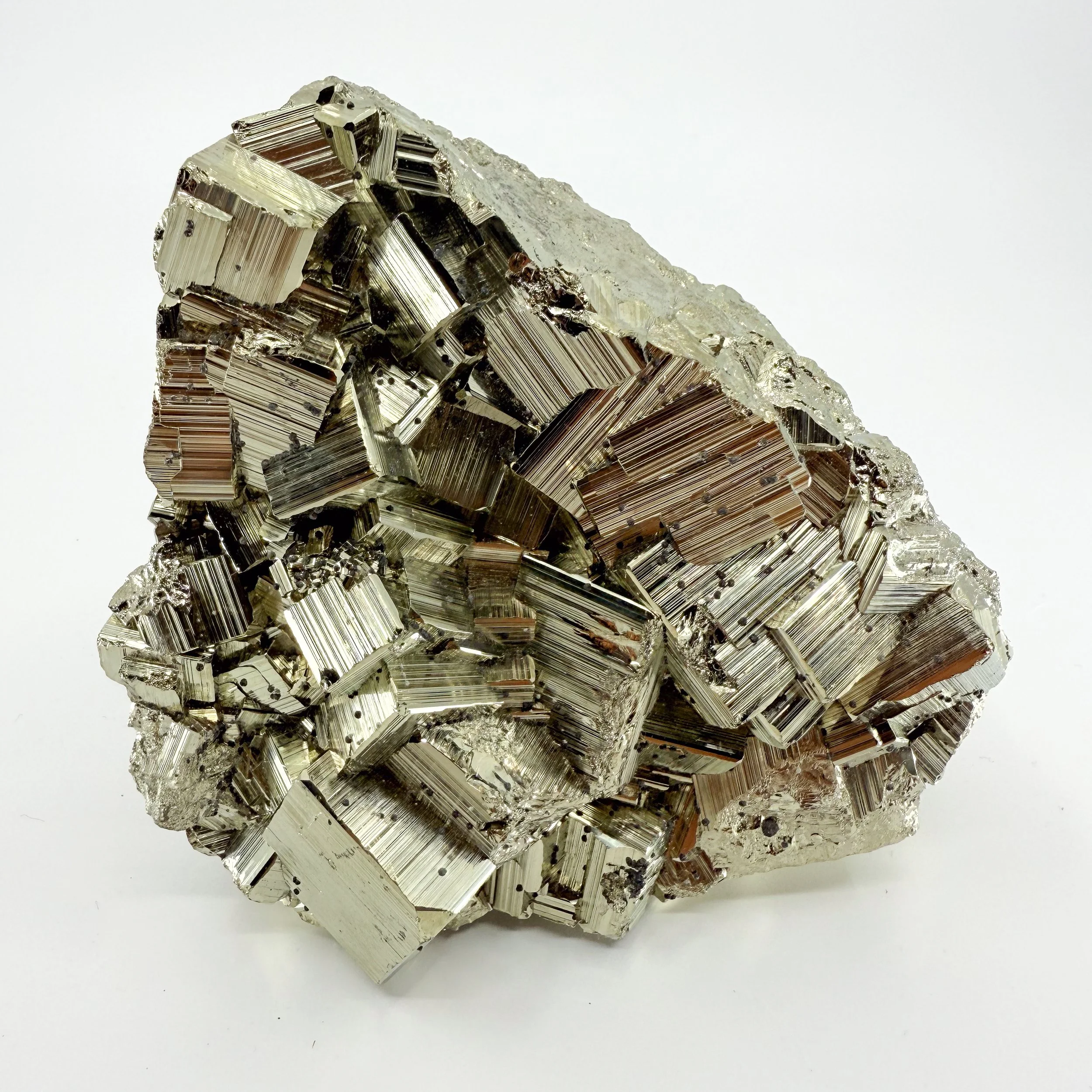
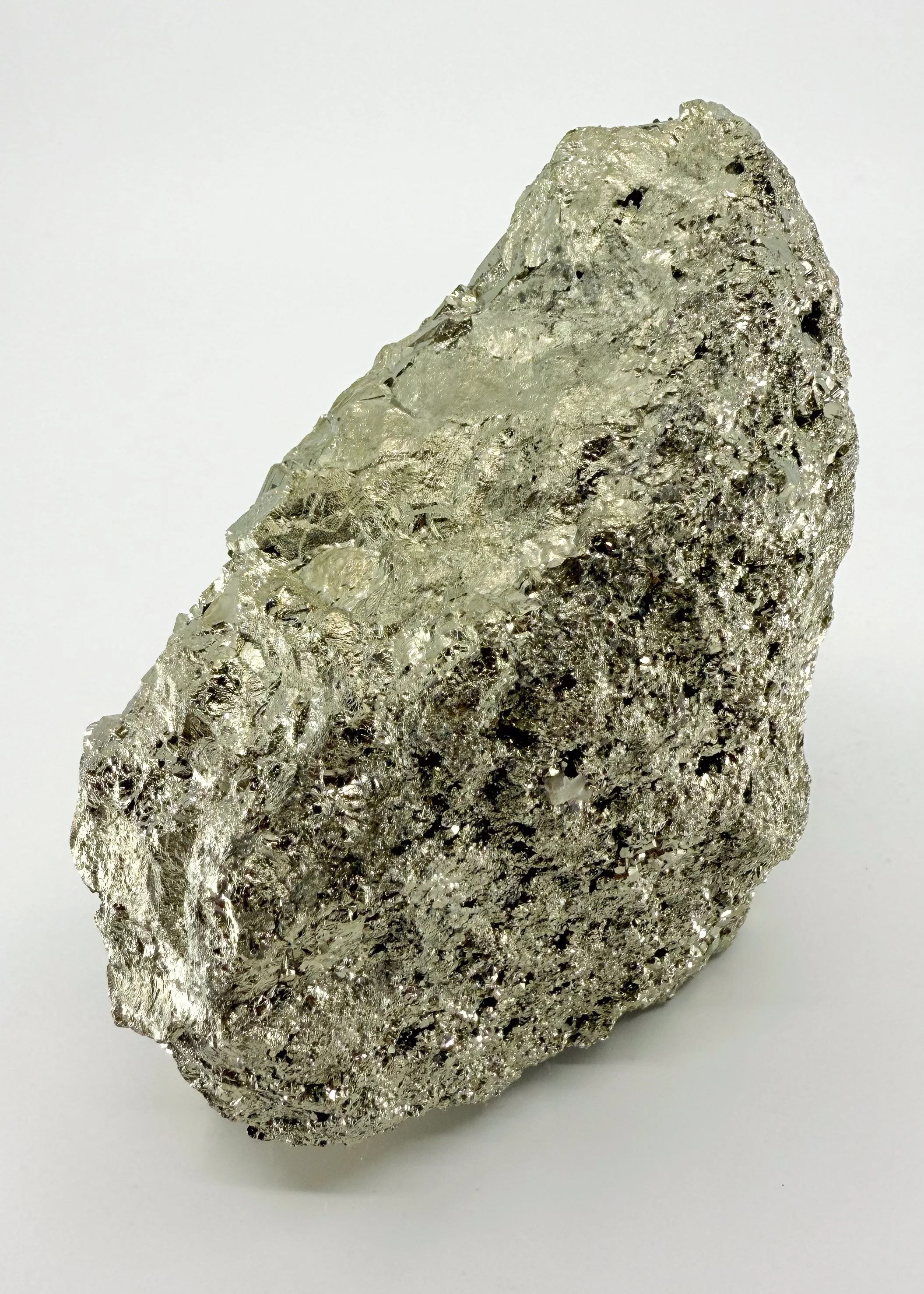


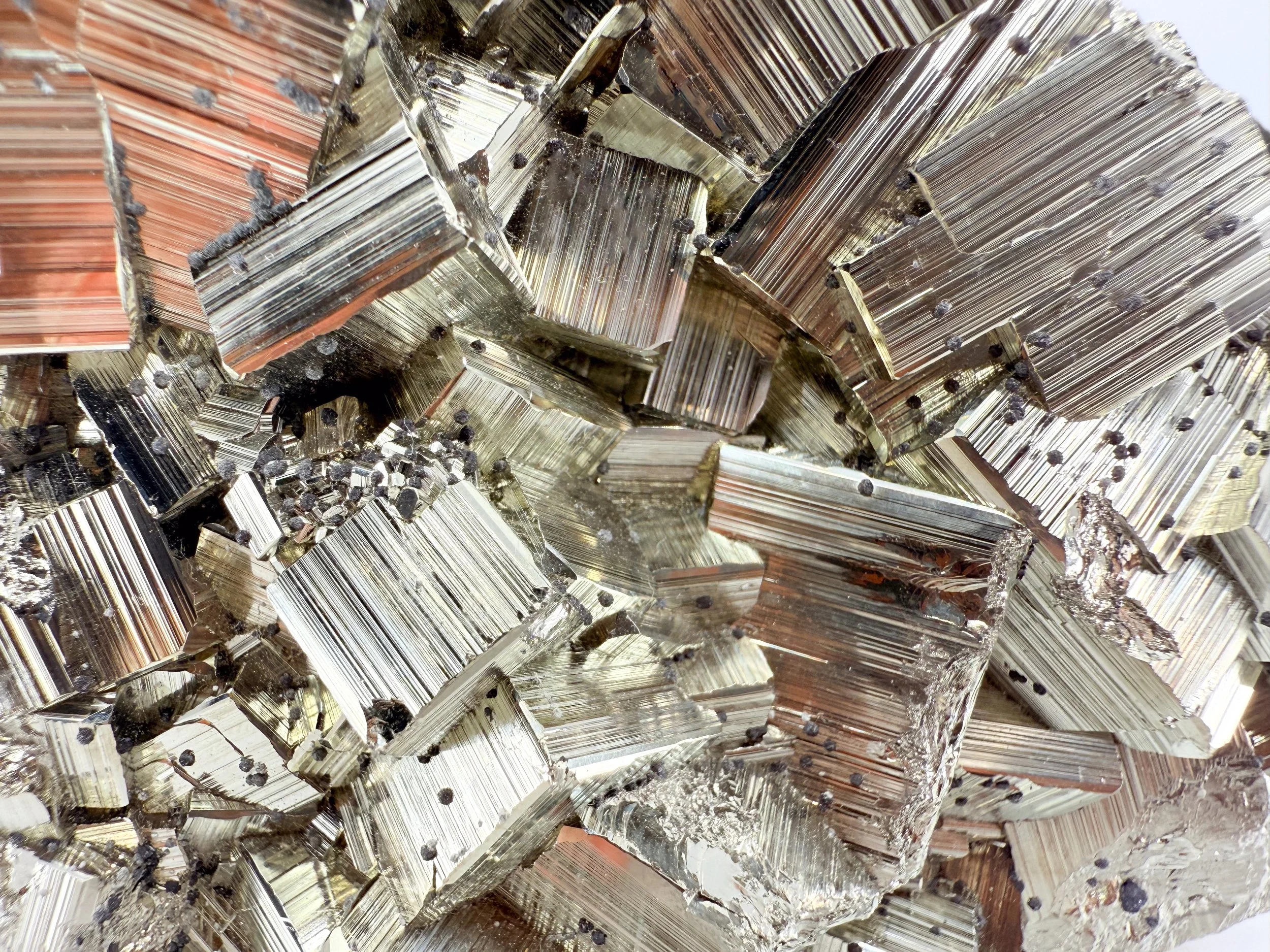

Box pyrite is characterized by its hollow, box-like cubic structures, often appearing as skeletal or frame-like formations. The surface retains a metallic brass-yellow tone, with edges defining the original crystal shape.
A form of pyrite (iron sulfide), box pyrite develops when original cubic crystals partially dissolve or alter over time, leaving behind the outer structure of the crystal. This process preserves the geometric outline while reducing the interior mass.
Pyrite has been used as a source of sulfur for sulfuric acid production and in early ignition systems due to its spark-producing properties, as well as in decorative contexts because of its metallic appearance.
Sourced from regions including Spain, Peru, and the United States, each specimen varies in crystal size, structural openness, and surface detail.
Box pyrite is characterized by its hollow, box-like cubic structures, often appearing as skeletal or frame-like formations. The surface retains a metallic brass-yellow tone, with edges defining the original crystal shape.
A form of pyrite (iron sulfide), box pyrite develops when original cubic crystals partially dissolve or alter over time, leaving behind the outer structure of the crystal. This process preserves the geometric outline while reducing the interior mass.
Pyrite has been used as a source of sulfur for sulfuric acid production and in early ignition systems due to its spark-producing properties, as well as in decorative contexts because of its metallic appearance.
Sourced from regions including Spain, Peru, and the United States, each specimen varies in crystal size, structural openness, and surface detail.