


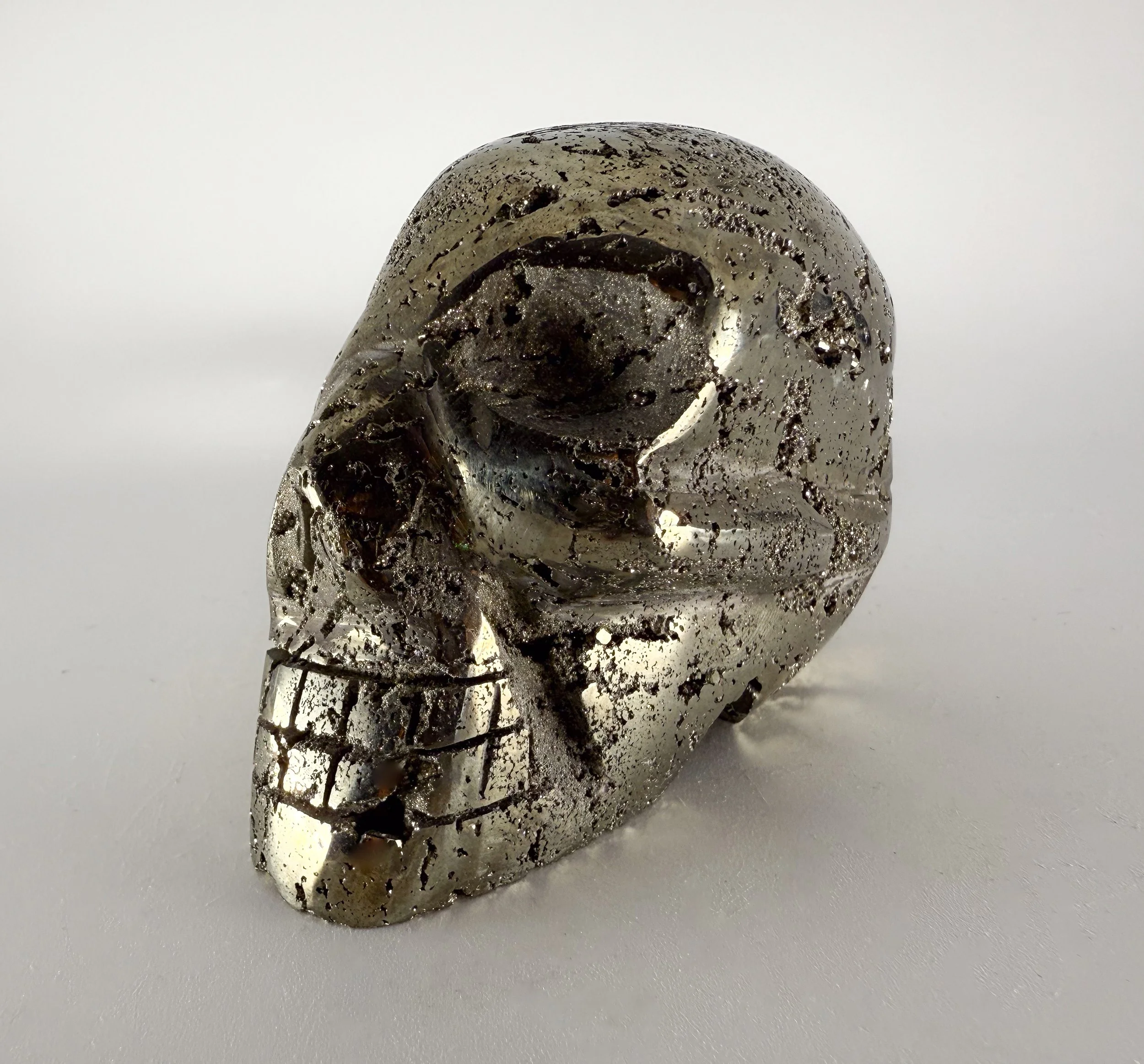
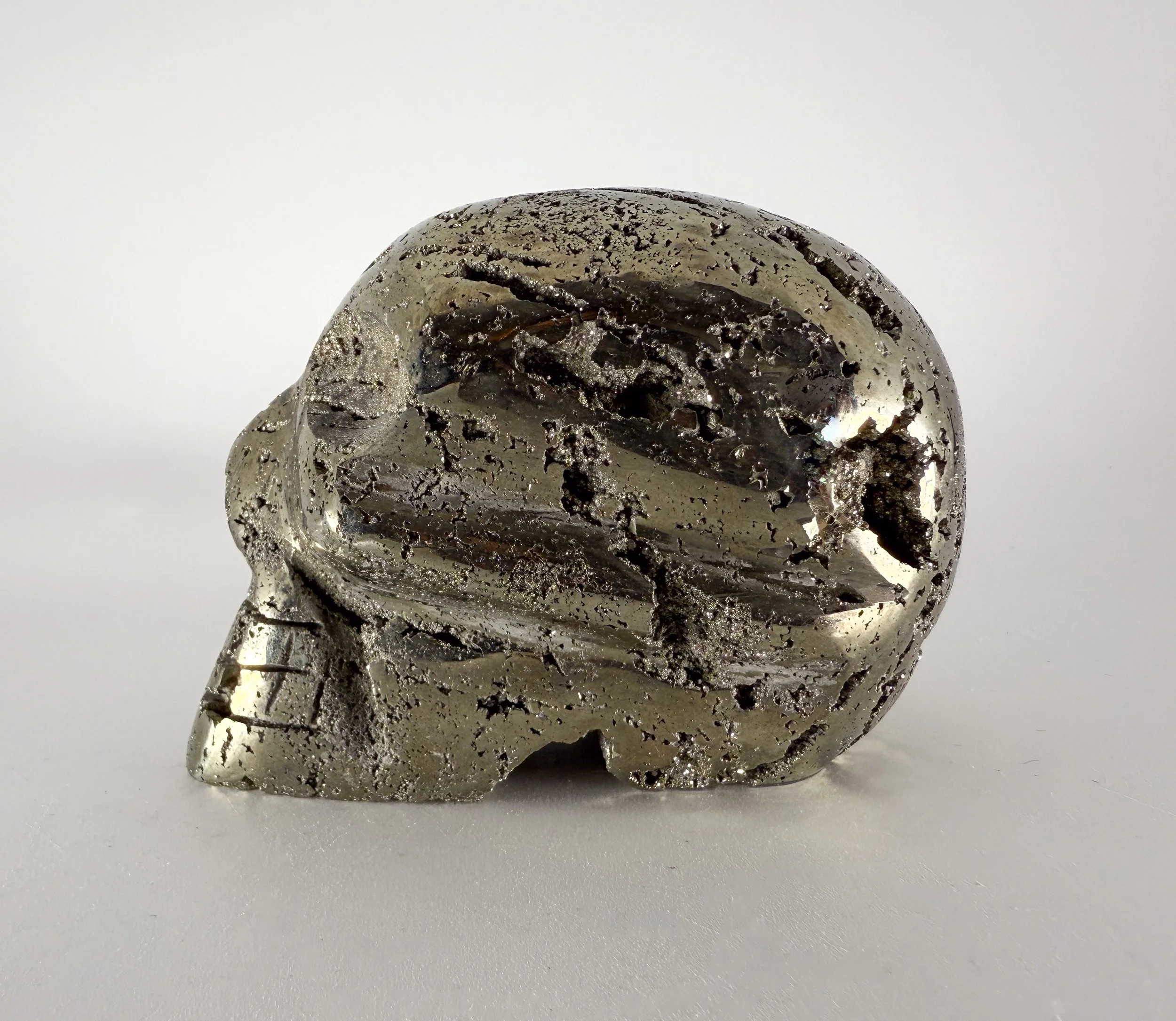

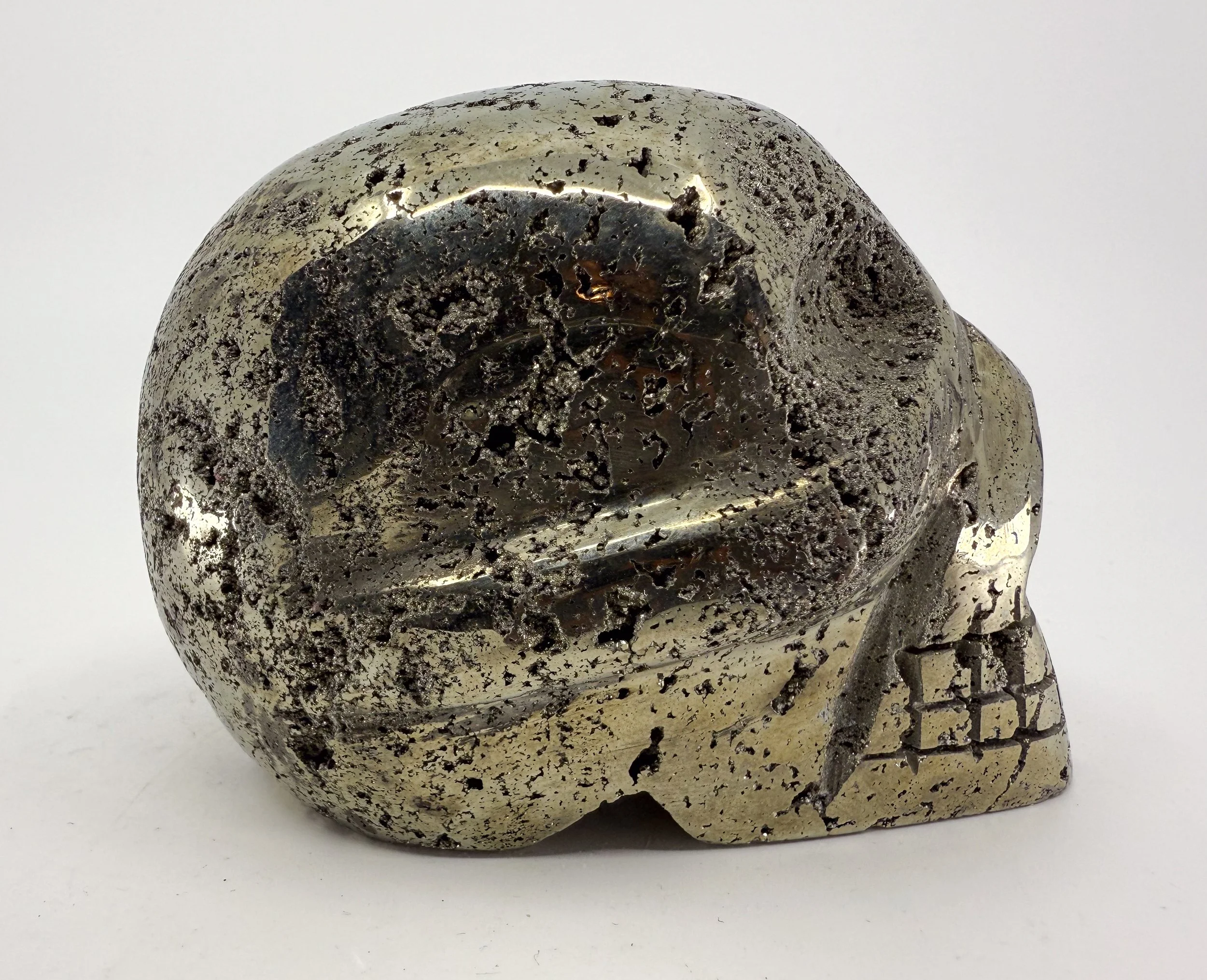
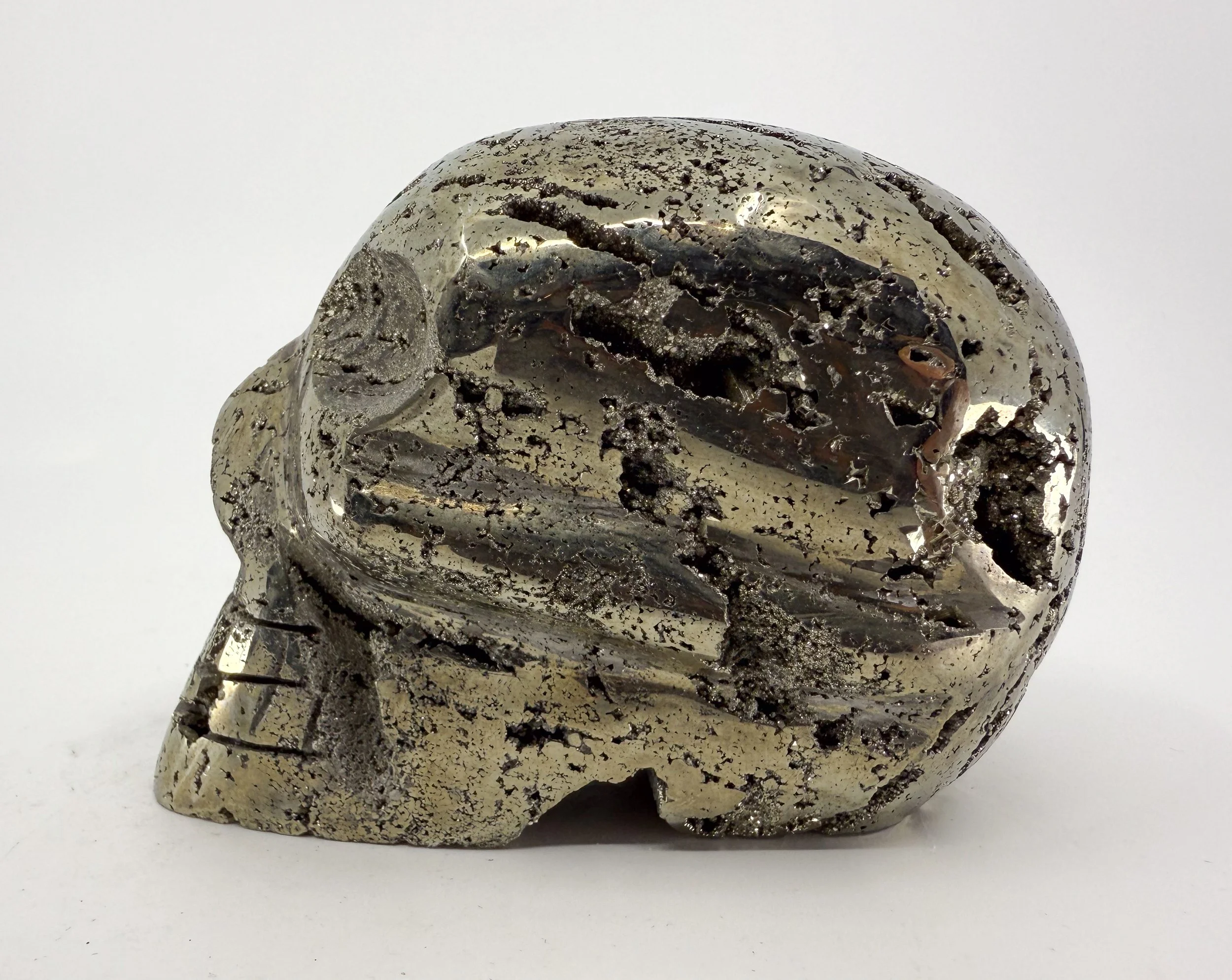
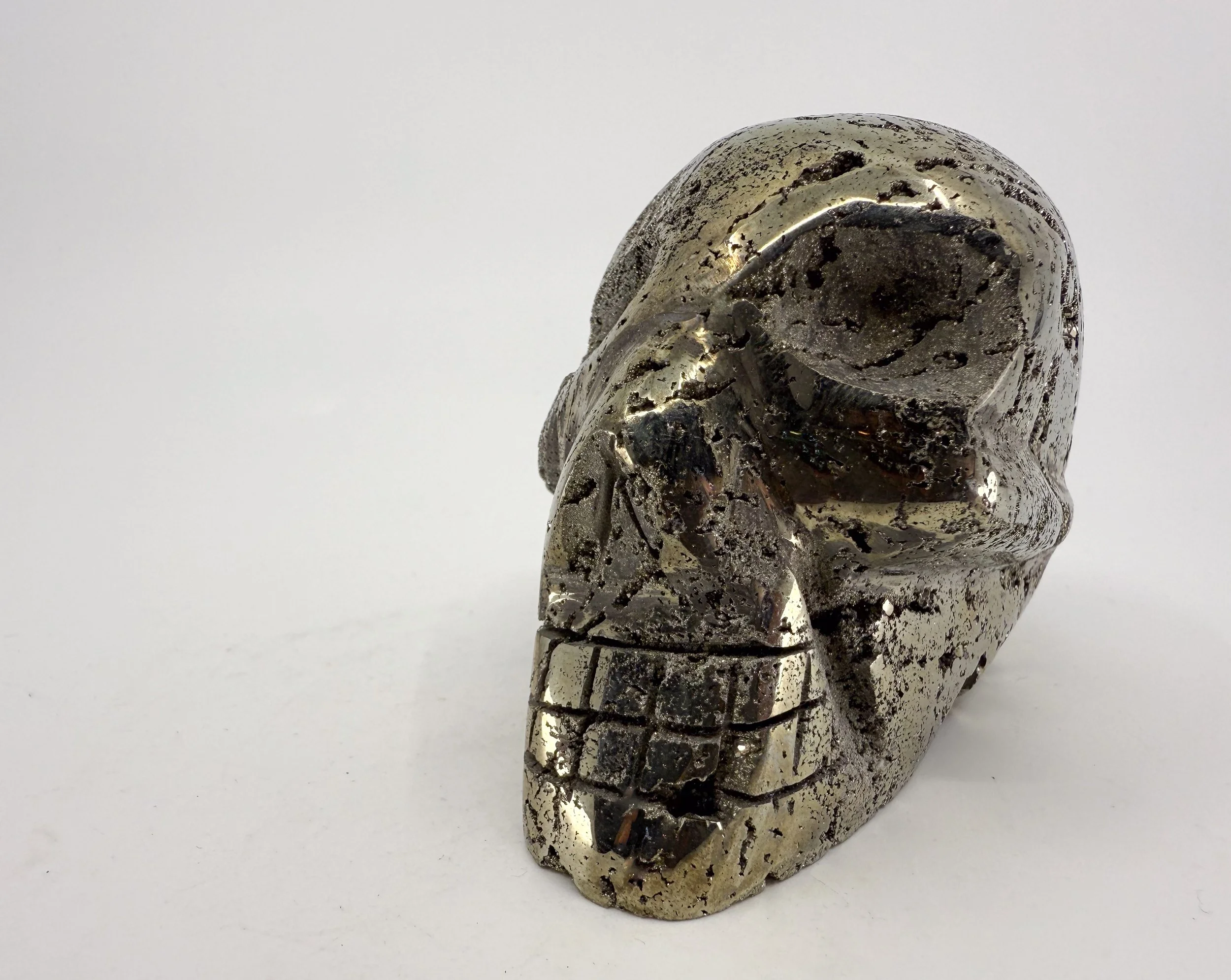


Pyrite is recognized for its brass-yellow tone and geometric crystal structure. The metallic surface reflects light in a defined, directional way.
An iron sulfide mineral, pyrite forms in cubic or faceted structures through hydrothermal and sedimentary processes.
Historical and industrial uses include sulfur extraction for sulfuric acid production, ignition sources in early firearms, and decorative use due to its resemblance to gold.
Sourced from regions including Spain, Peru, and the United States, each specimen varies in structure and formation.
Pyrite is recognized for its brass-yellow tone and geometric crystal structure. The metallic surface reflects light in a defined, directional way.
An iron sulfide mineral, pyrite forms in cubic or faceted structures through hydrothermal and sedimentary processes.
Historical and industrial uses include sulfur extraction for sulfuric acid production, ignition sources in early firearms, and decorative use due to its resemblance to gold.
Sourced from regions including Spain, Peru, and the United States, each specimen varies in structure and formation.