

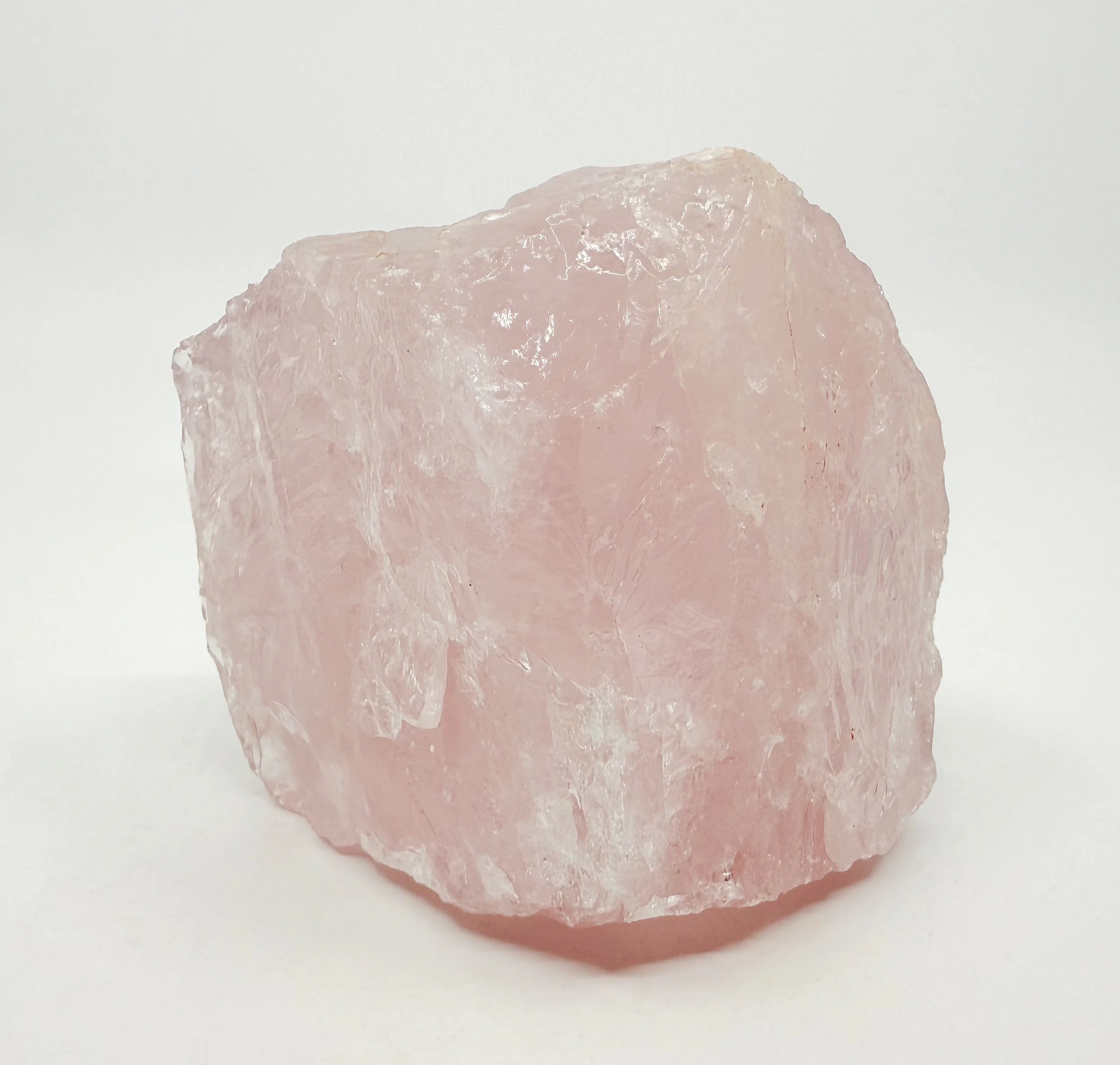

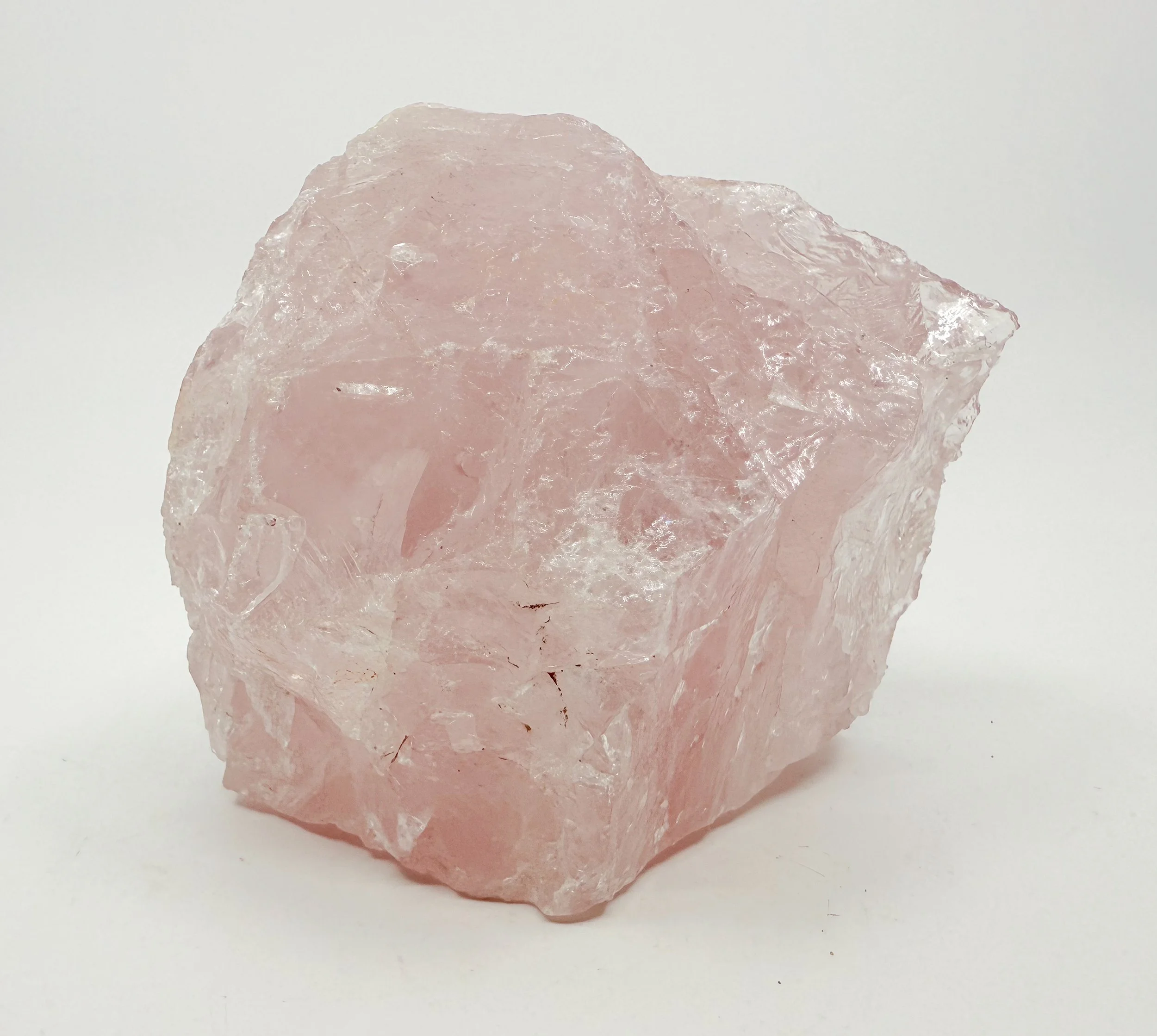
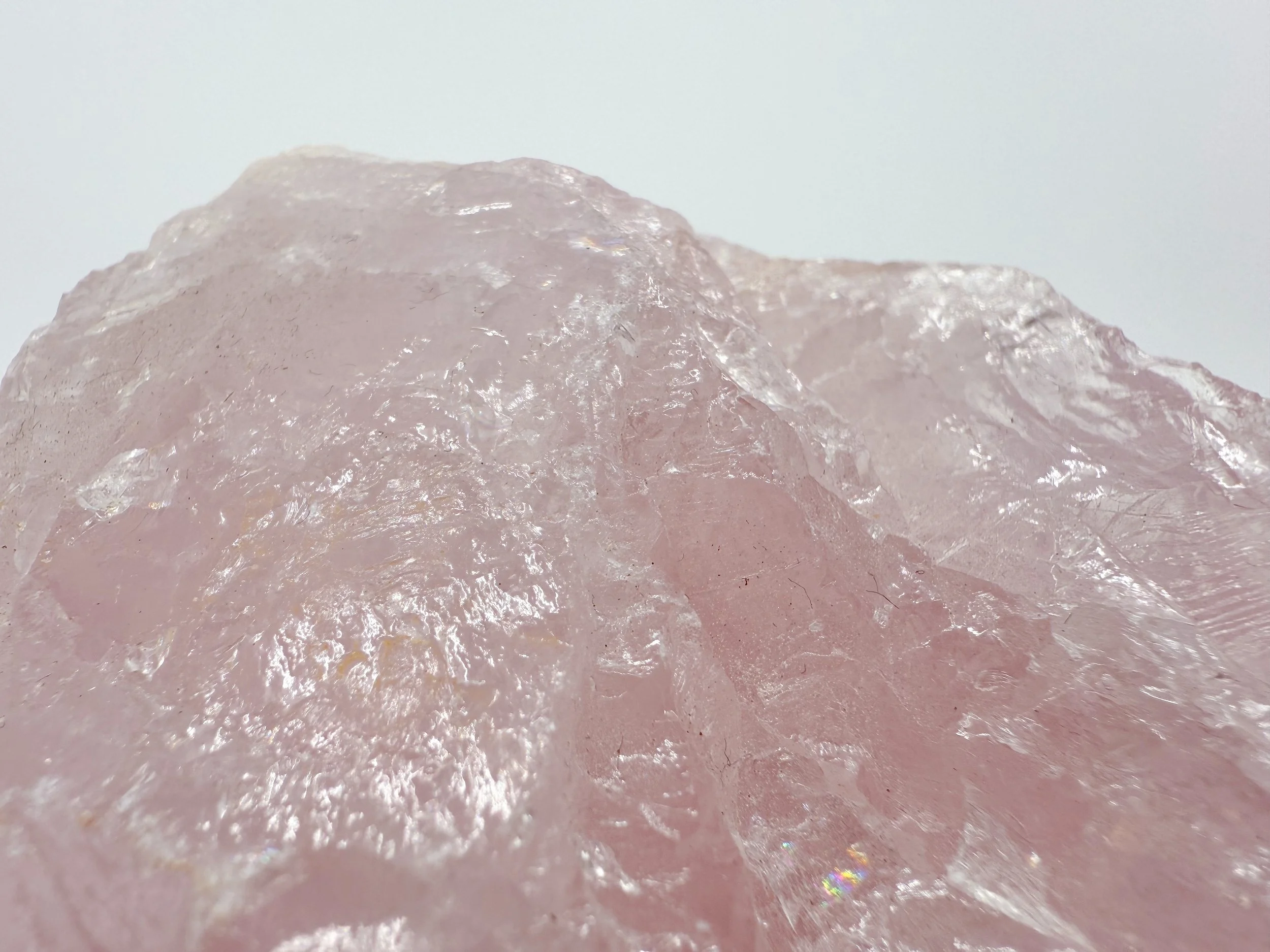

Rose quartz is characterized by its pink coloration and typically translucent to opaque appearance. Tone ranges from pale blush to more saturated pink depending on composition and internal structure.
A variety of quartz composed of silicon dioxide, rose quartz forms through the crystallization of silica-rich solutions in igneous and metamorphic environments. Its color is influenced by trace elements and microscopic inclusions within the crystal structure.
Quartz has been used in electronics for its piezoelectric properties, in timekeeping devices, and in optical and decorative applications, while rose quartz in particular has been shaped into carved objects, beads, and ornamental elements.
Sourced from regions including Brazil, Madagascar, the United States, and India, each specimen varies in tone, translucency, and internal structure.
Rose quartz is characterized by its pink coloration and typically translucent to opaque appearance. Tone ranges from pale blush to more saturated pink depending on composition and internal structure.
A variety of quartz composed of silicon dioxide, rose quartz forms through the crystallization of silica-rich solutions in igneous and metamorphic environments. Its color is influenced by trace elements and microscopic inclusions within the crystal structure.
Quartz has been used in electronics for its piezoelectric properties, in timekeeping devices, and in optical and decorative applications, while rose quartz in particular has been shaped into carved objects, beads, and ornamental elements.
Sourced from regions including Brazil, Madagascar, the United States, and India, each specimen varies in tone, translucency, and internal structure.