

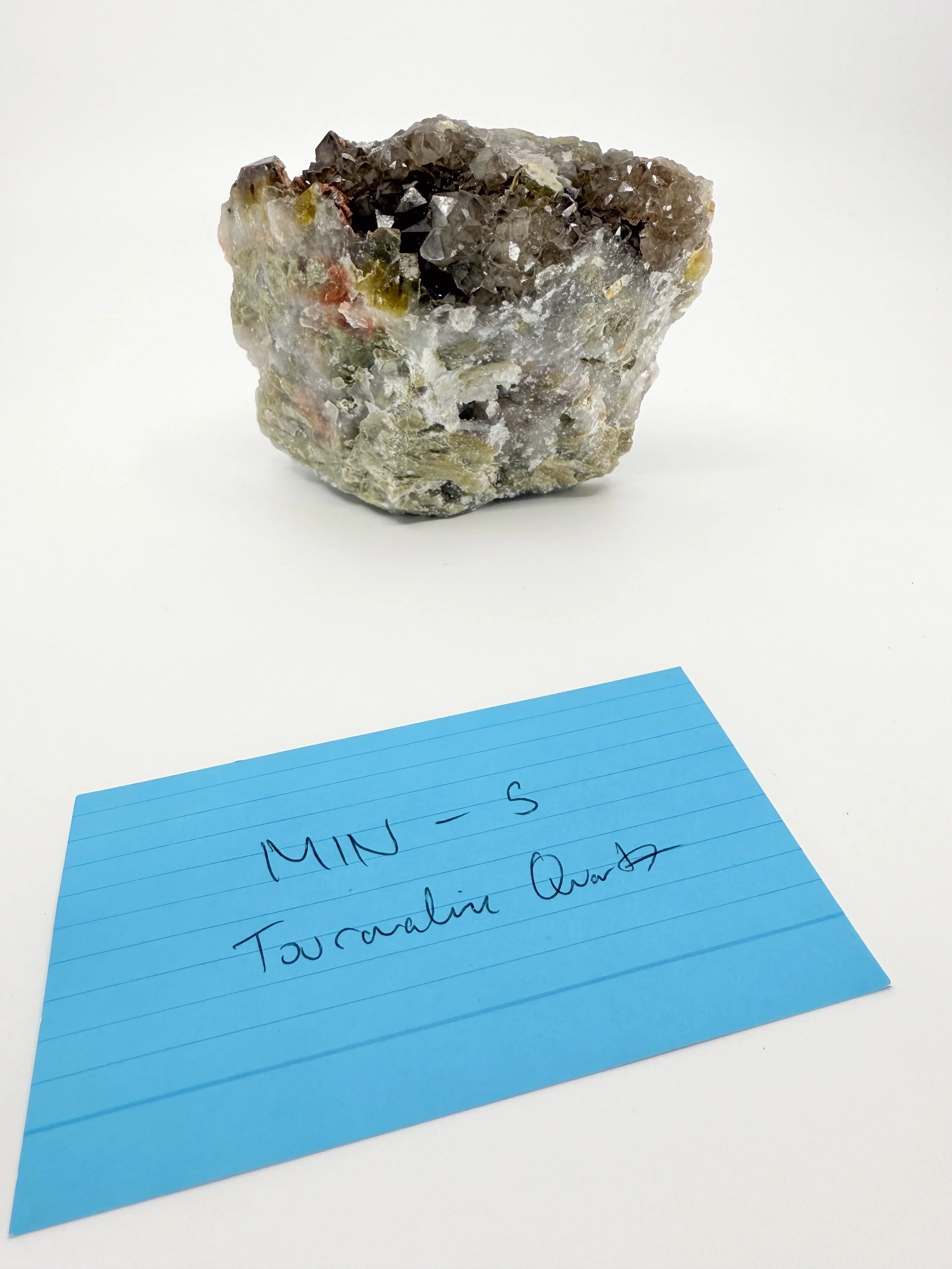


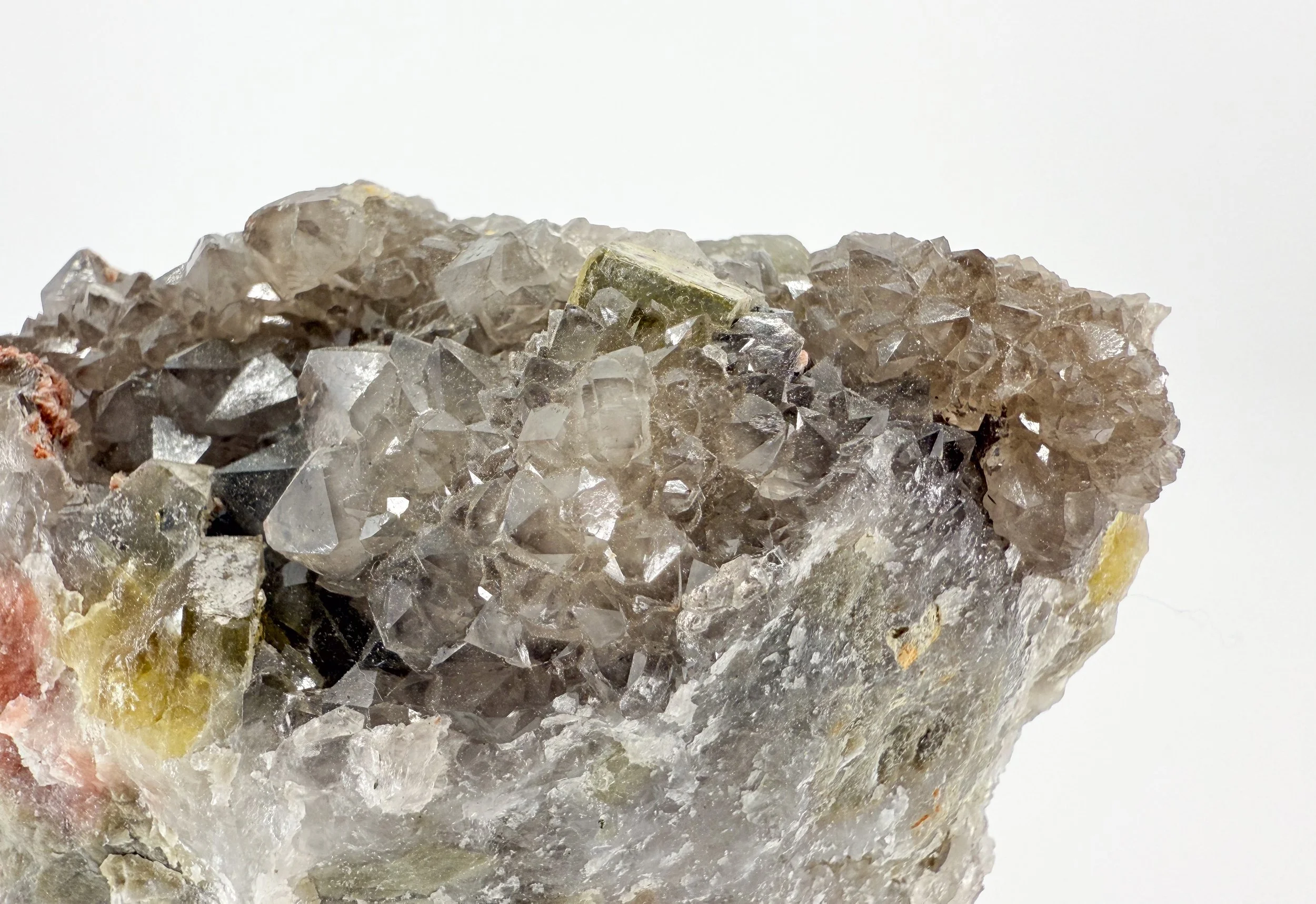
Tourmalinated quartz is characterized by clear to translucent quartz containing black, needle-like inclusions. The inclusions vary in density and orientation, creating linear patterns within the stone.
A composite mineral, tourmalinated quartz forms when black tourmaline (schorl) crystallizes within quartz during hydrothermal growth. The result is a combination of silicon dioxide and boron silicate structures within a single specimen.
Quartz has been used in electronics for its piezoelectric properties, in timekeeping devices, and in optical and decorative applications, while tourmaline has been used in carved objects, jewelry, and early electrical experiments due to its electrical properties.
Sourced from regions including Brazil, Madagascar, and the United States, each specimen varies in clarity, inclusion pattern, and overall structure.
Tourmalinated quartz is characterized by clear to translucent quartz containing black, needle-like inclusions. The inclusions vary in density and orientation, creating linear patterns within the stone.
A composite mineral, tourmalinated quartz forms when black tourmaline (schorl) crystallizes within quartz during hydrothermal growth. The result is a combination of silicon dioxide and boron silicate structures within a single specimen.
Quartz has been used in electronics for its piezoelectric properties, in timekeeping devices, and in optical and decorative applications, while tourmaline has been used in carved objects, jewelry, and early electrical experiments due to its electrical properties.
Sourced from regions including Brazil, Madagascar, and the United States, each specimen varies in clarity, inclusion pattern, and overall structure.