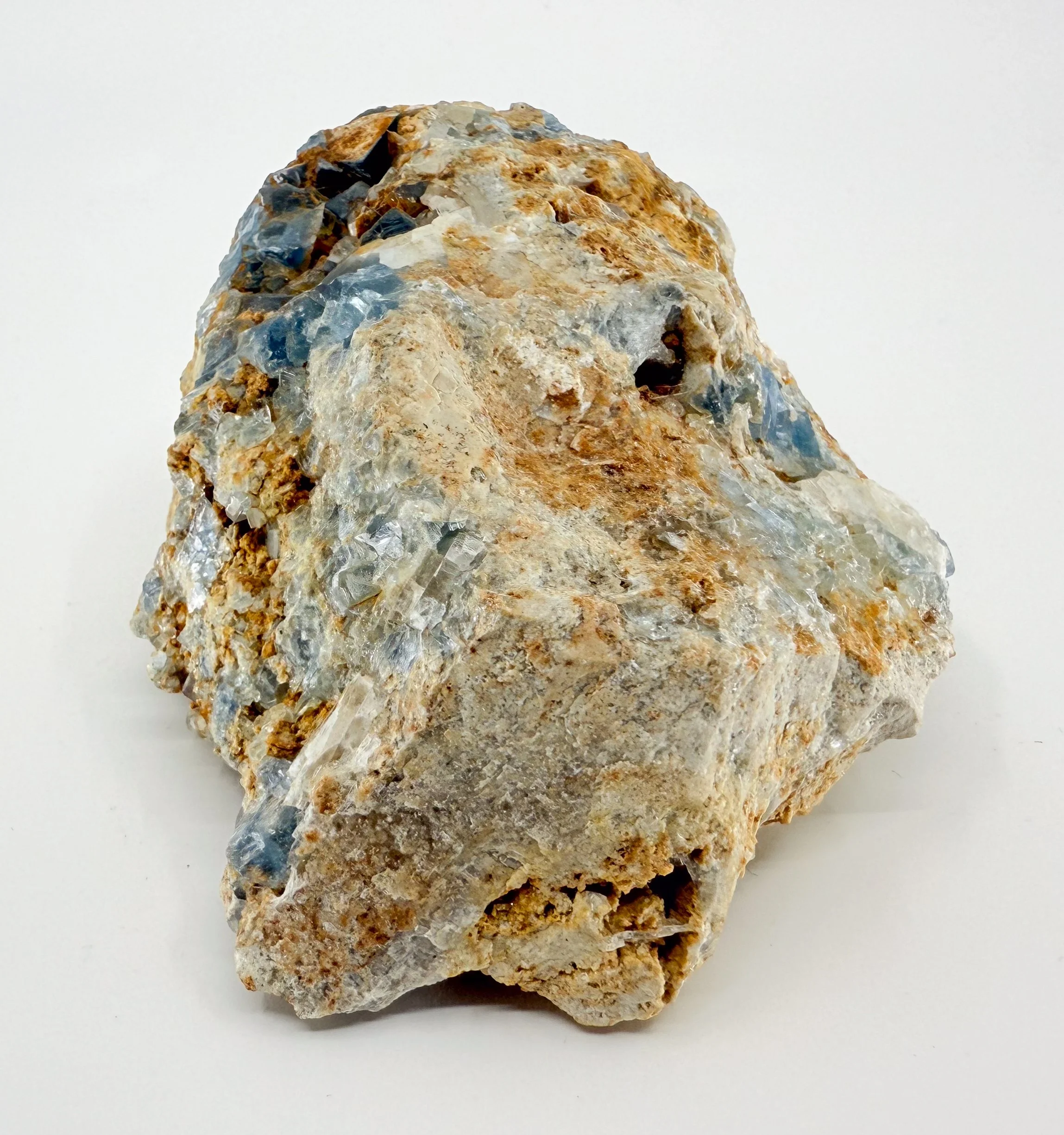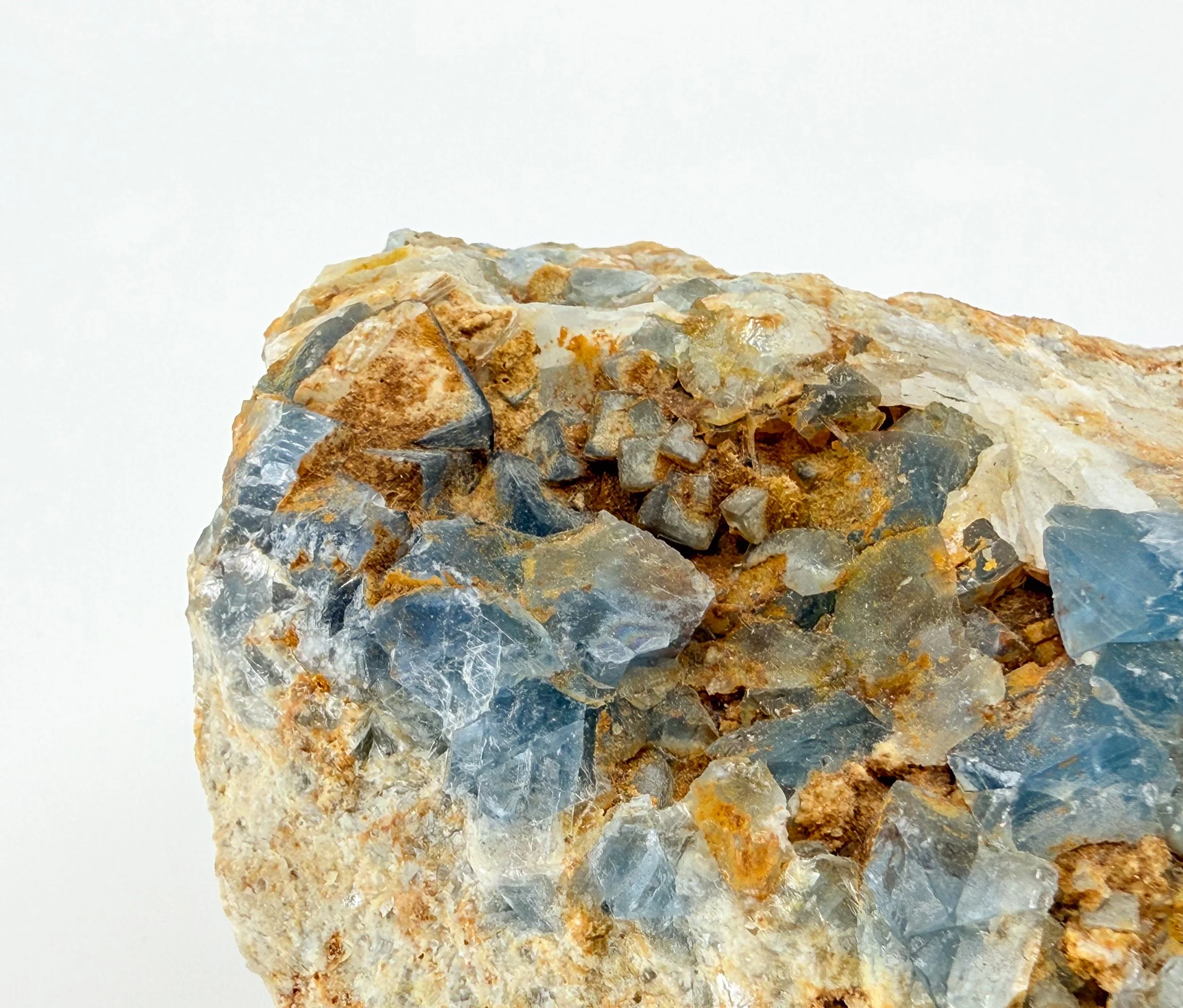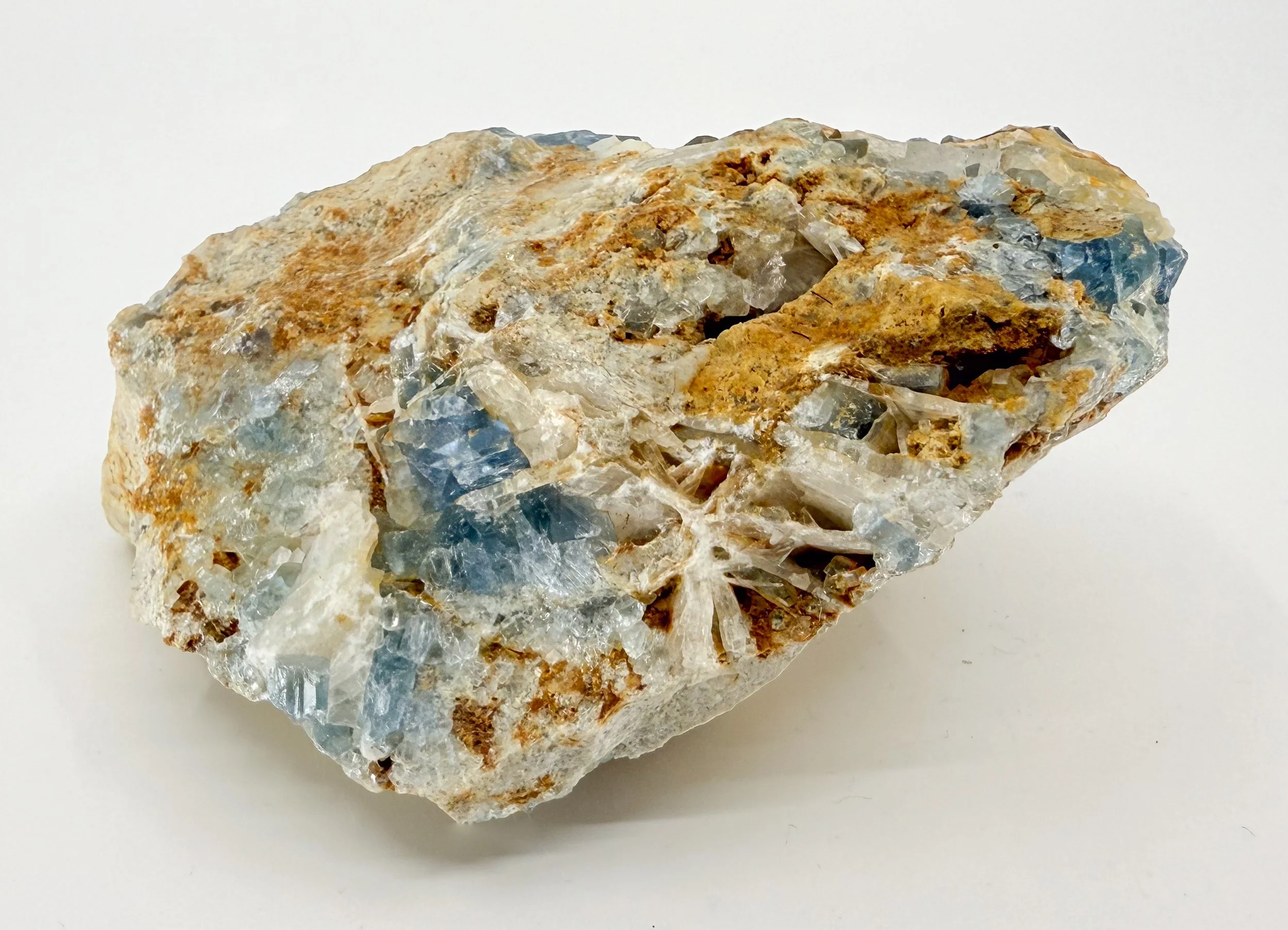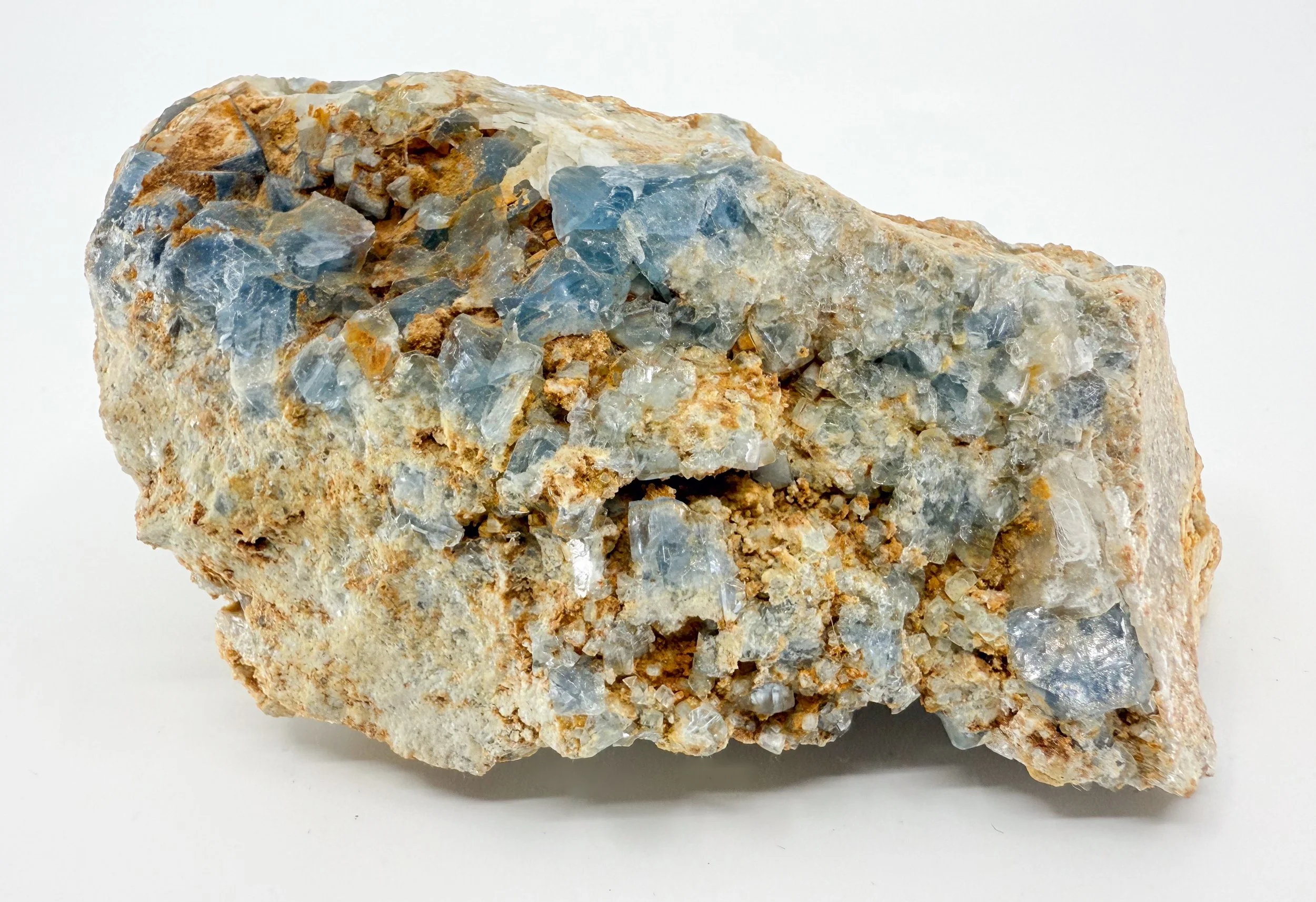
Blue chalcedony is a variety of quartz composed of microcrystalline silica, known for its soft blue color and typically translucent, smooth appearance.
It forms in volcanic and sedimentary environments as silica-rich fluids solidify, often developing rounded or botryoidal (layered, bubble-like) structures.
This specimen features a soft, even blue tone with a slightly translucent quality, allowing light to pass through portions of the stone.
The surface appears smooth and rounded rather than sharply crystalline, with gentle variations that create a more uniform, cohesive look.
The lack of sharp crystal structure combined with consistent color gives the piece a more solid, continuous appearance compared to more faceted or high-contrast minerals.
Blue chalcedony is a variety of quartz composed of microcrystalline silica, known for its soft blue color and typically translucent, smooth appearance.
It forms in volcanic and sedimentary environments as silica-rich fluids solidify, often developing rounded or botryoidal (layered, bubble-like) structures.
This specimen features a soft, even blue tone with a slightly translucent quality, allowing light to pass through portions of the stone.
The surface appears smooth and rounded rather than sharply crystalline, with gentle variations that create a more uniform, cohesive look.
The lack of sharp crystal structure combined with consistent color gives the piece a more solid, continuous appearance compared to more faceted or high-contrast minerals.