Quartz is a silicon dioxide mineral known for its clarity and geometric crystal structure, while pink tourmaline (rubellite) is a boron silicate mineral that appears pink to red, and mica is a sheet-like mineral that reflects light with a metallic or pearly sheen.
These minerals commonly form together in pegmatite environments, where tourmaline and mica develop within or alongside quartz, creating intergrown structures with strong color and texture contrast.
Quartz is a silicon dioxide mineral known for its clarity and geometric crystal structure, while pink tourmaline (rubellite) is a boron silicate mineral that appears pink to red, and mica is a sheet-like mineral that reflects light with a metallic or pearly sheen.
These minerals commonly form together in pegmatite environments, where tourmaline and mica develop within or alongside quartz, creating intergrown structures with strong color and texture contrast.
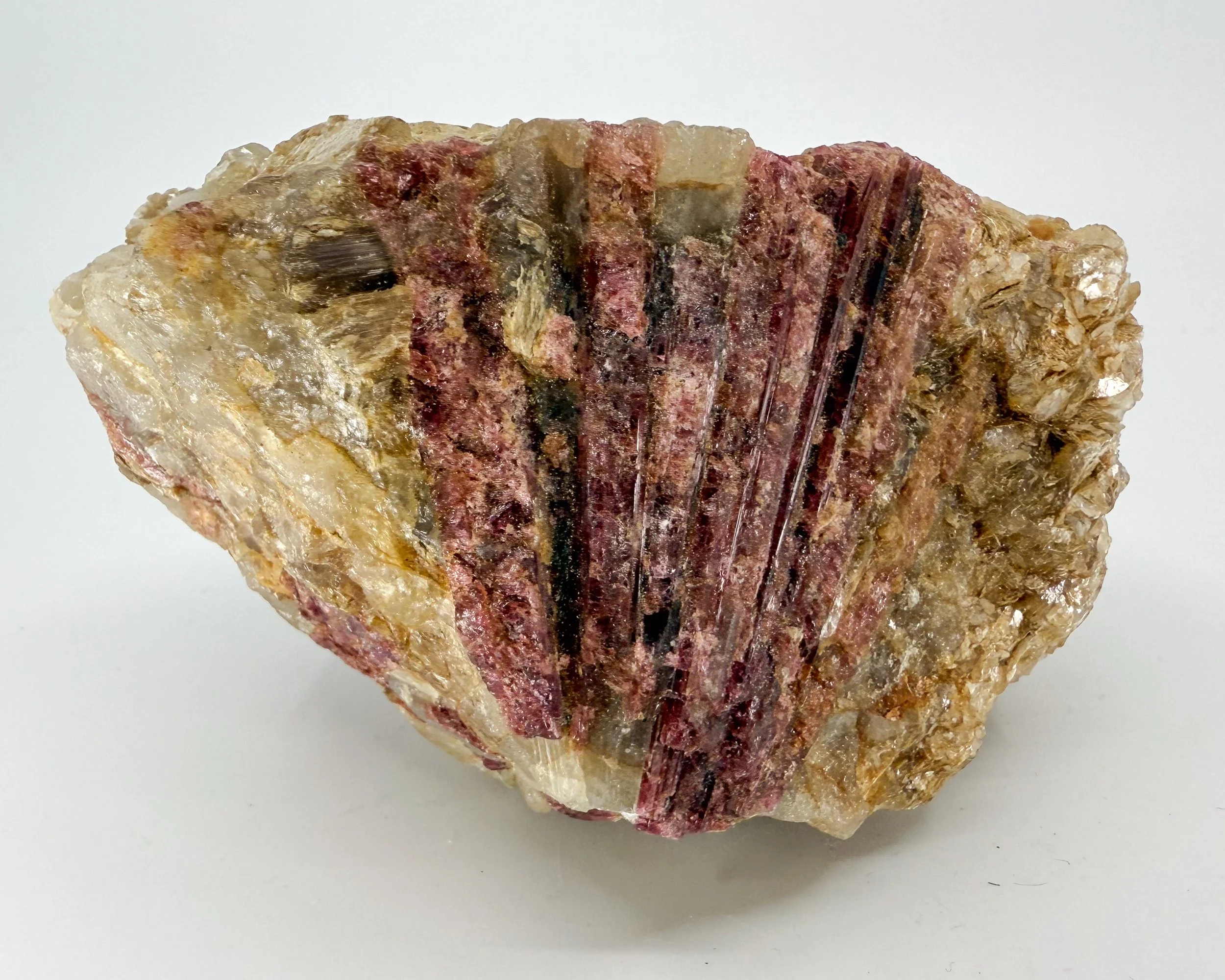 Image 1 of 8
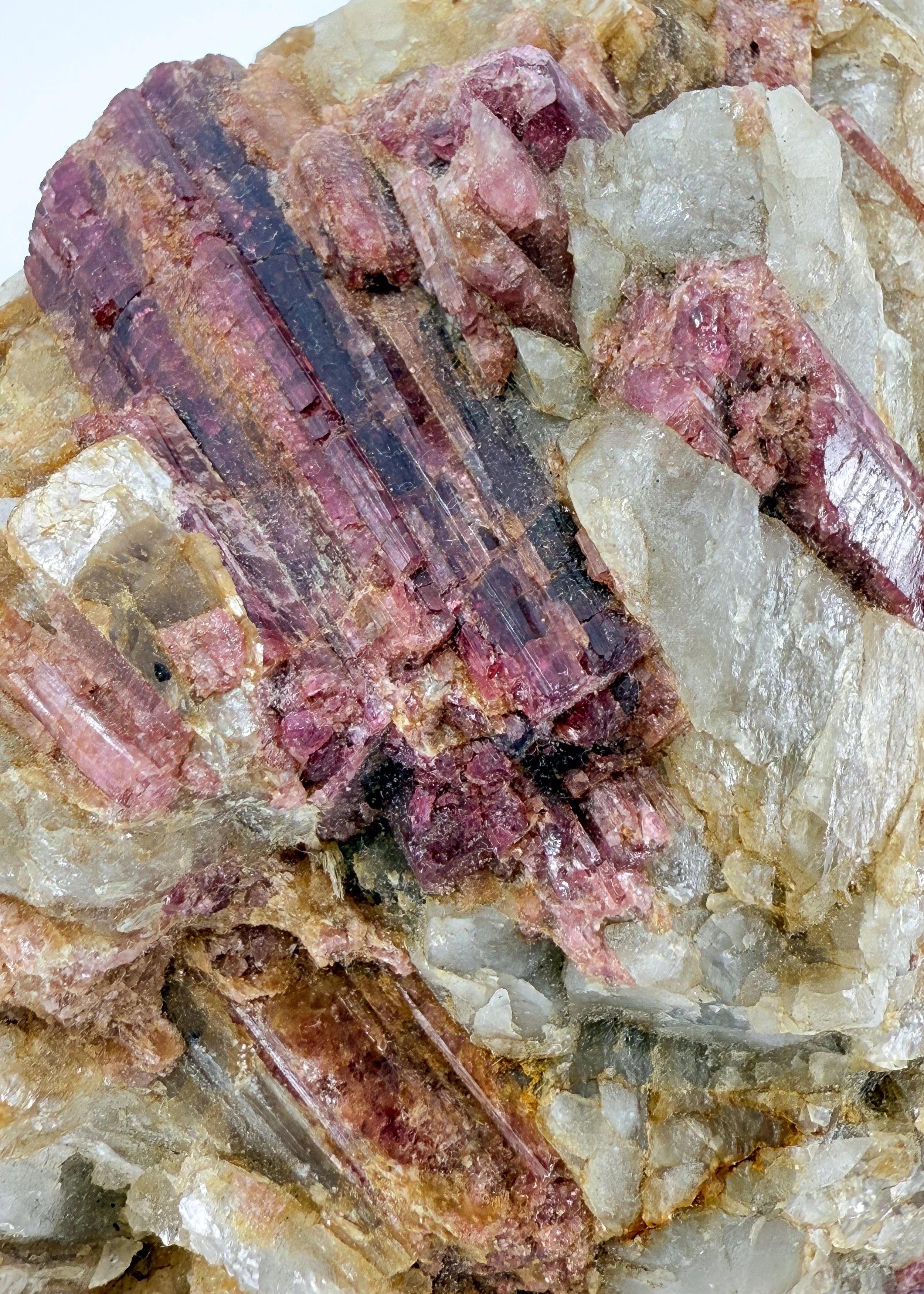 Image 2 of 8
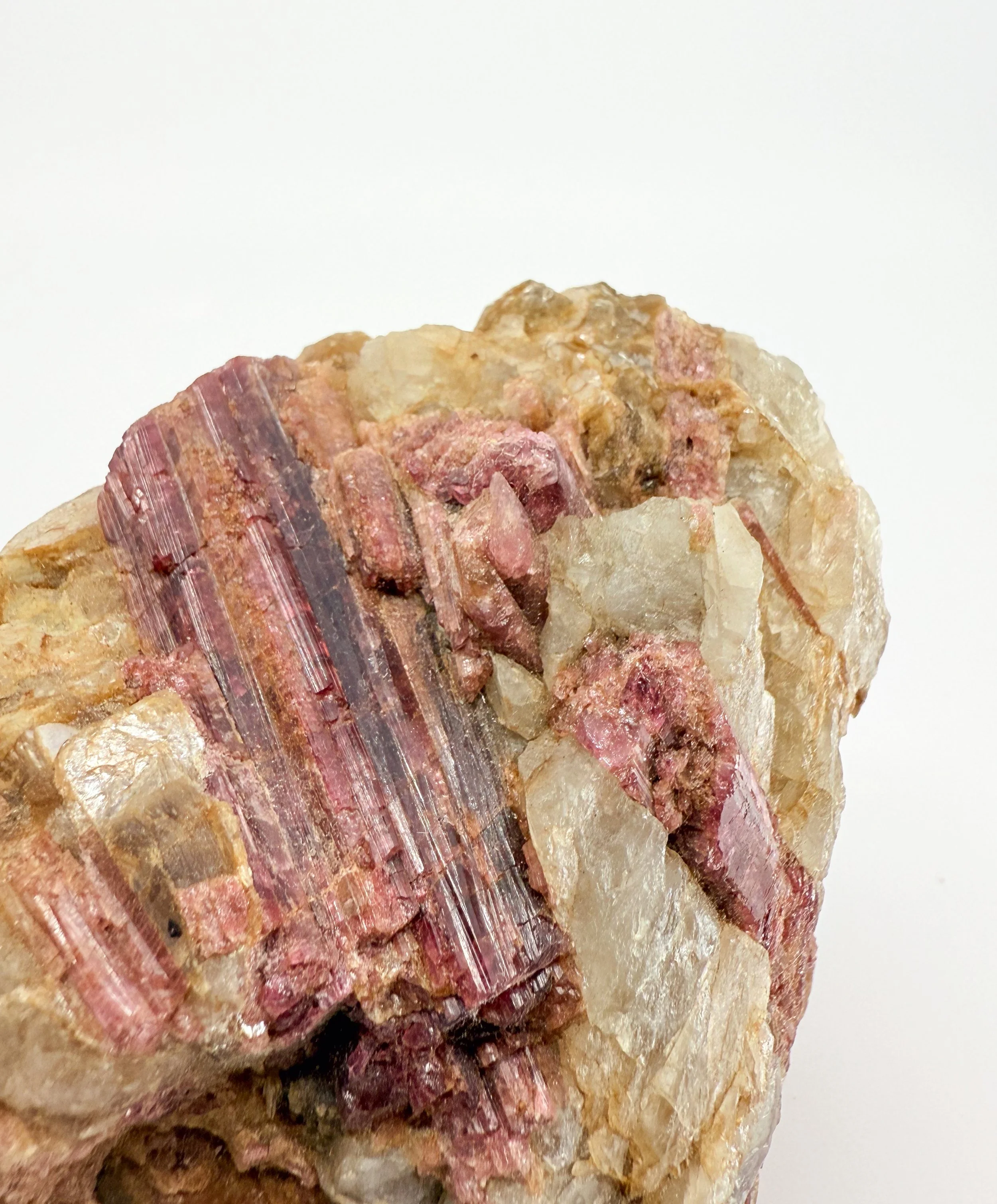 Image 3 of 8
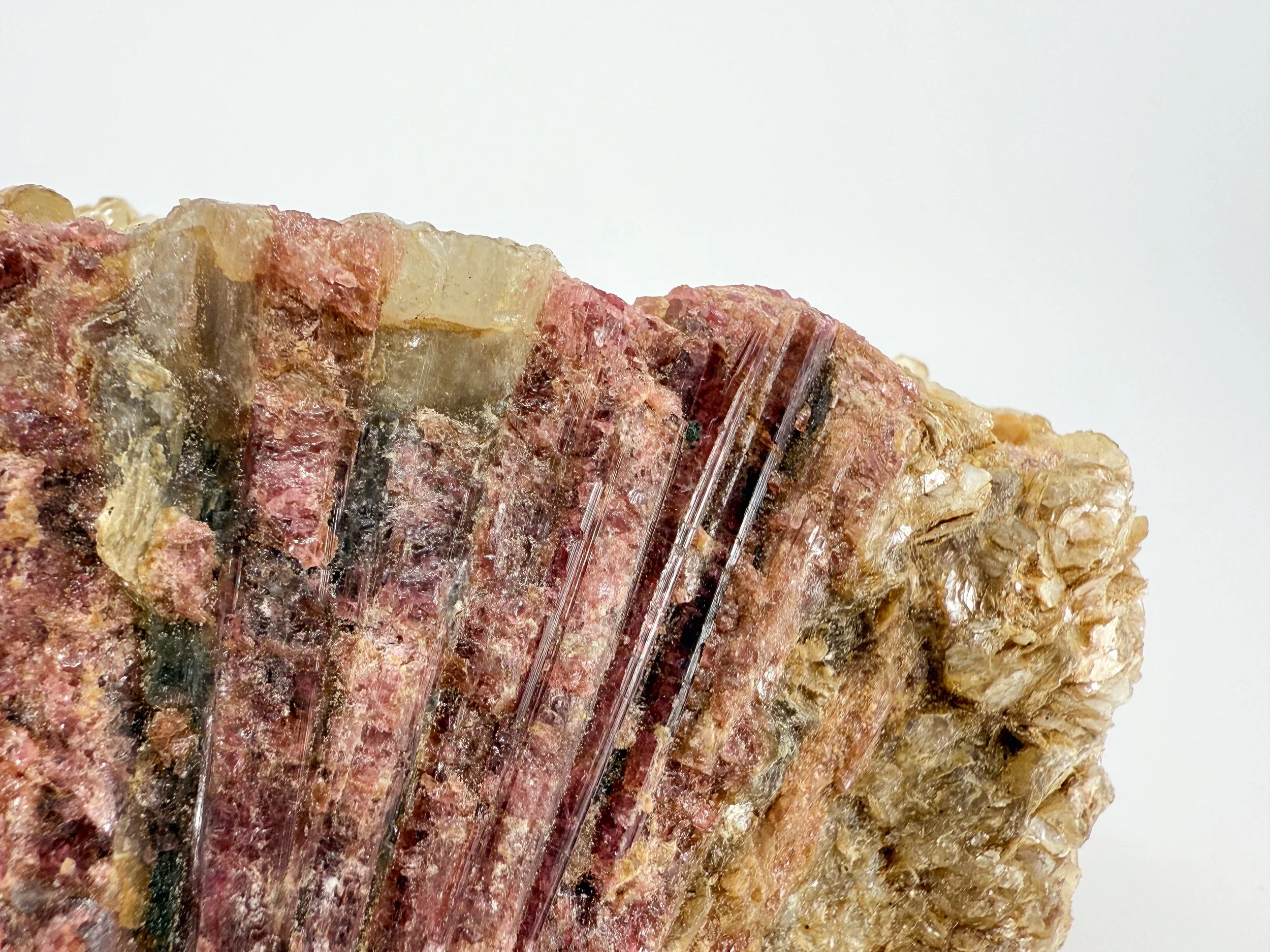 Image 4 of 8
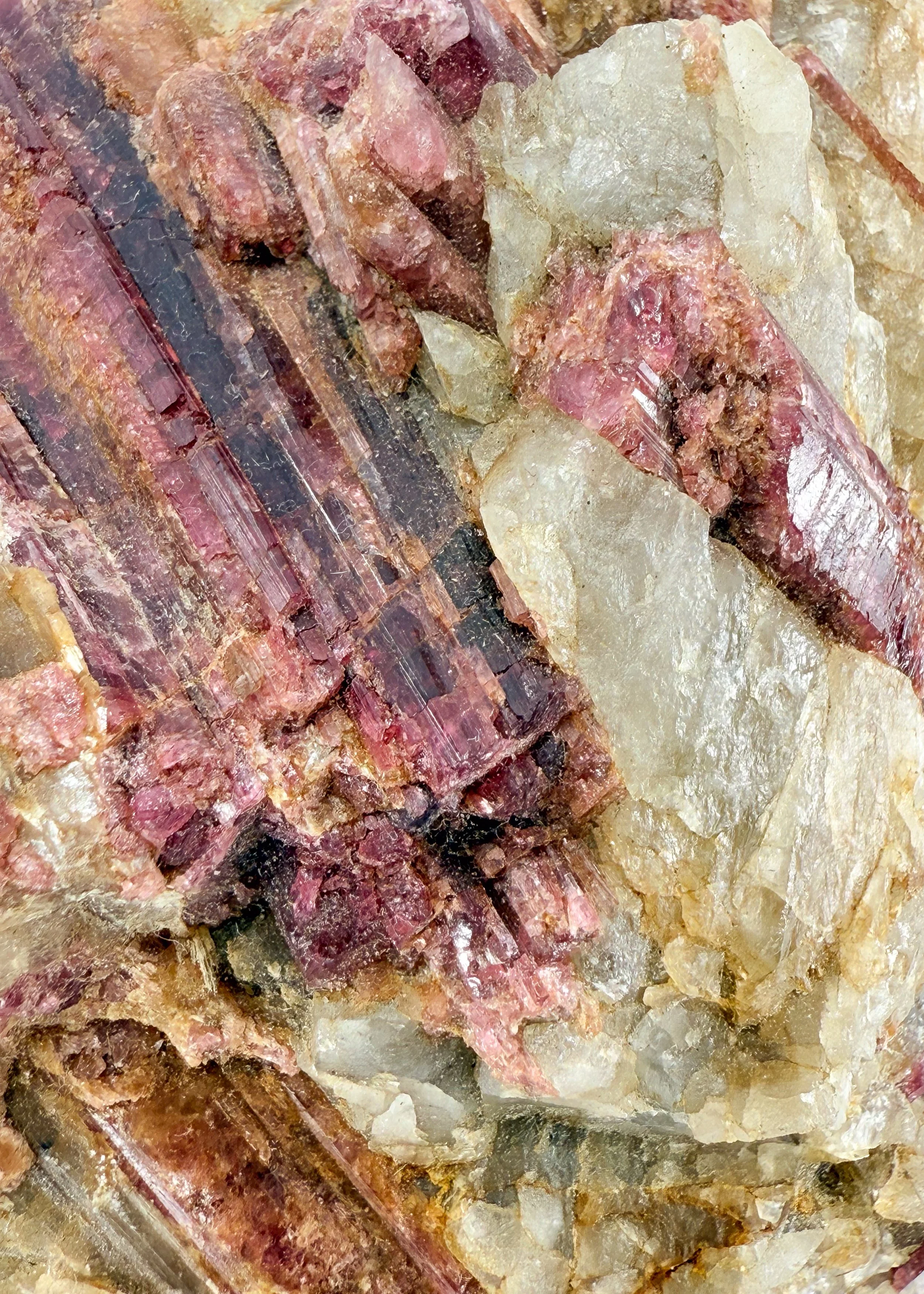 Image 5 of 8
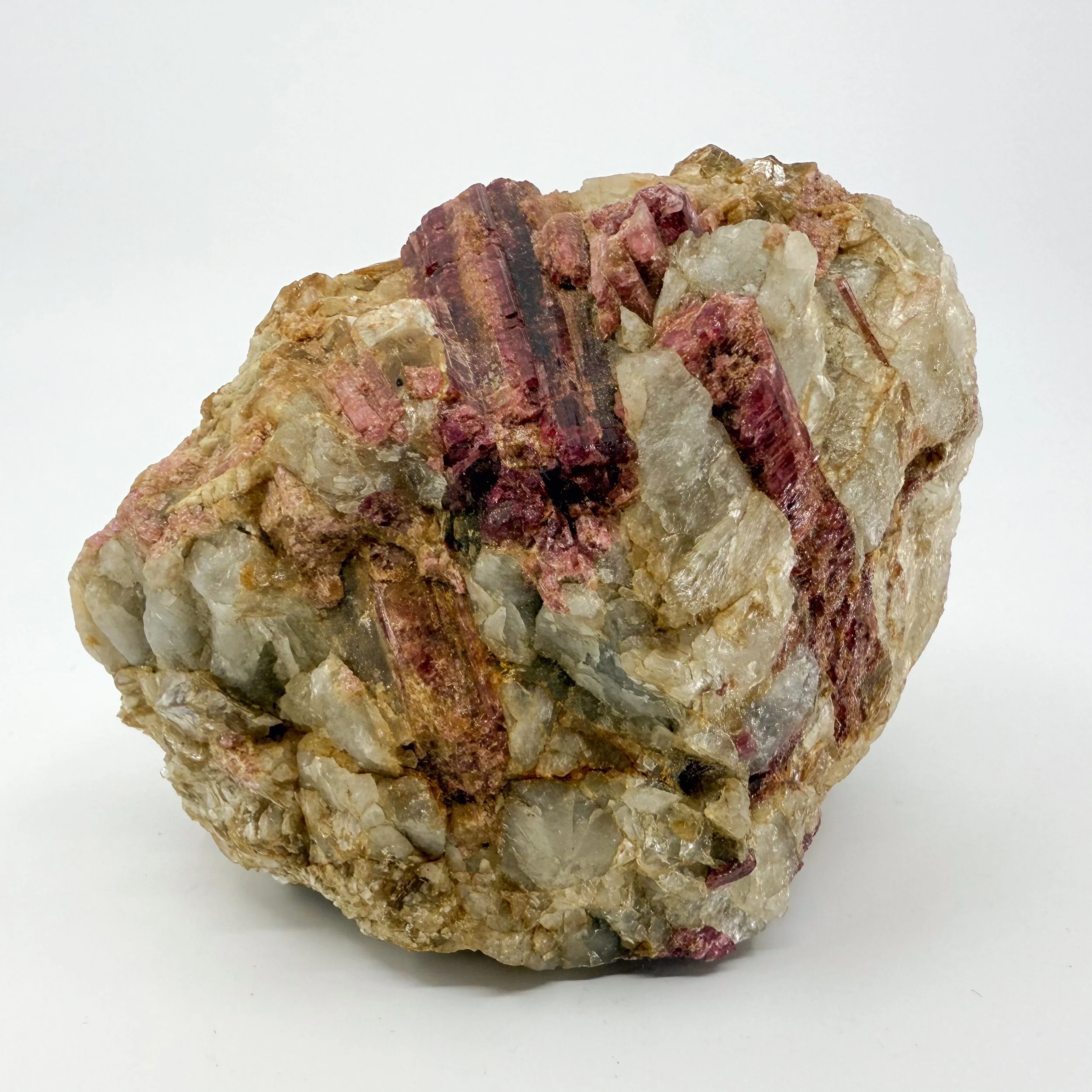 Image 6 of 8
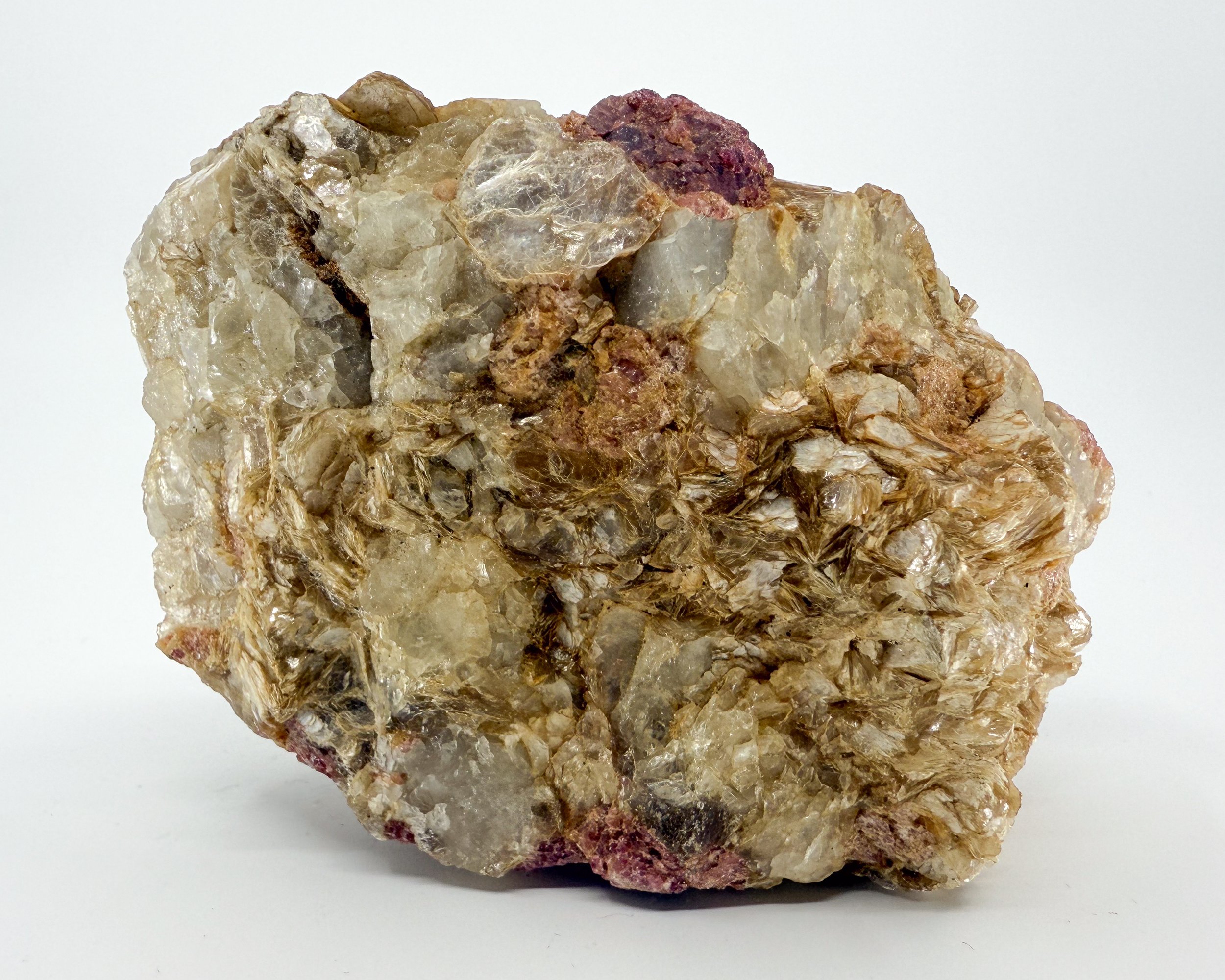 Image 7 of 8
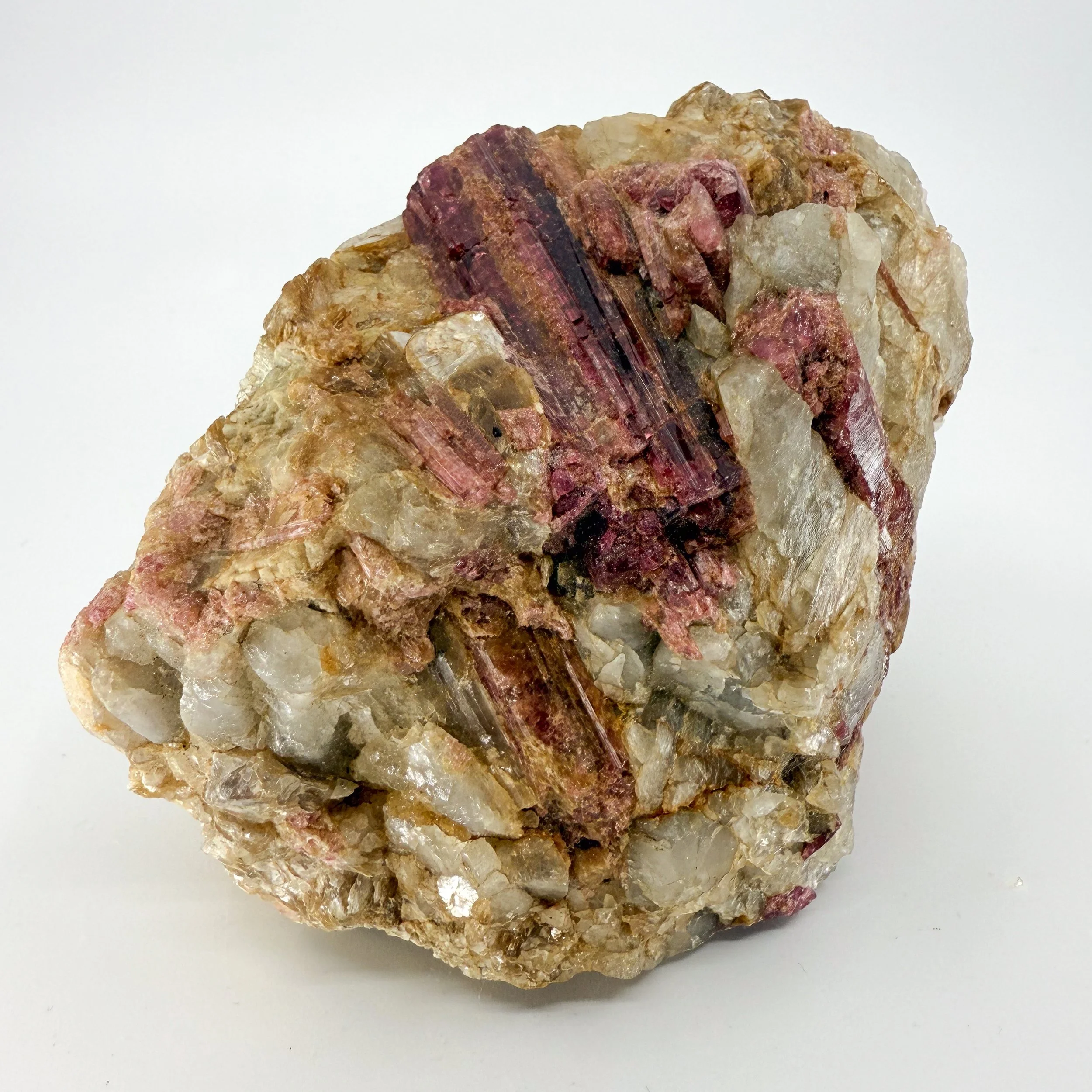 Image 8 of 8