 Image 1 of 5
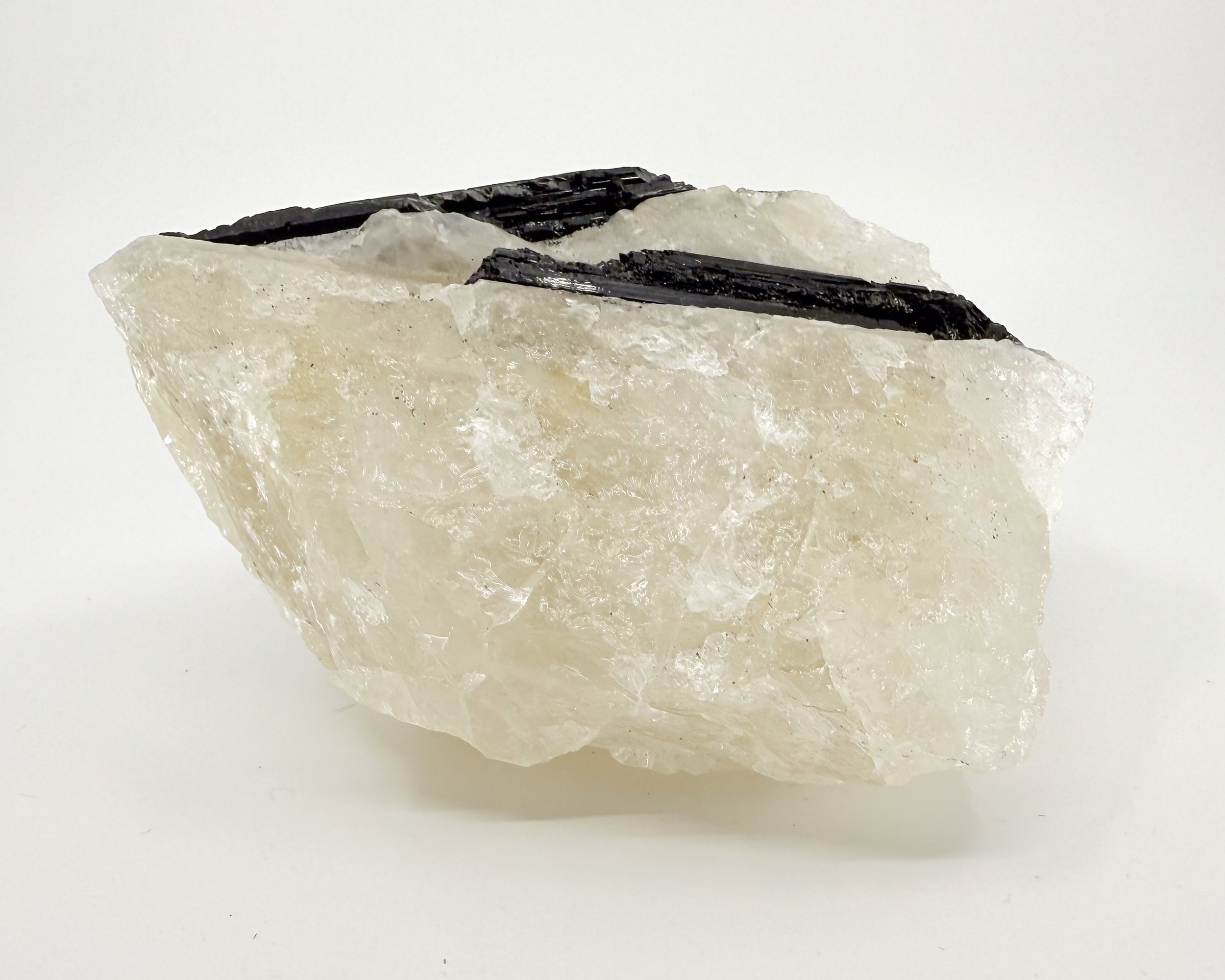 Image 2 of 5
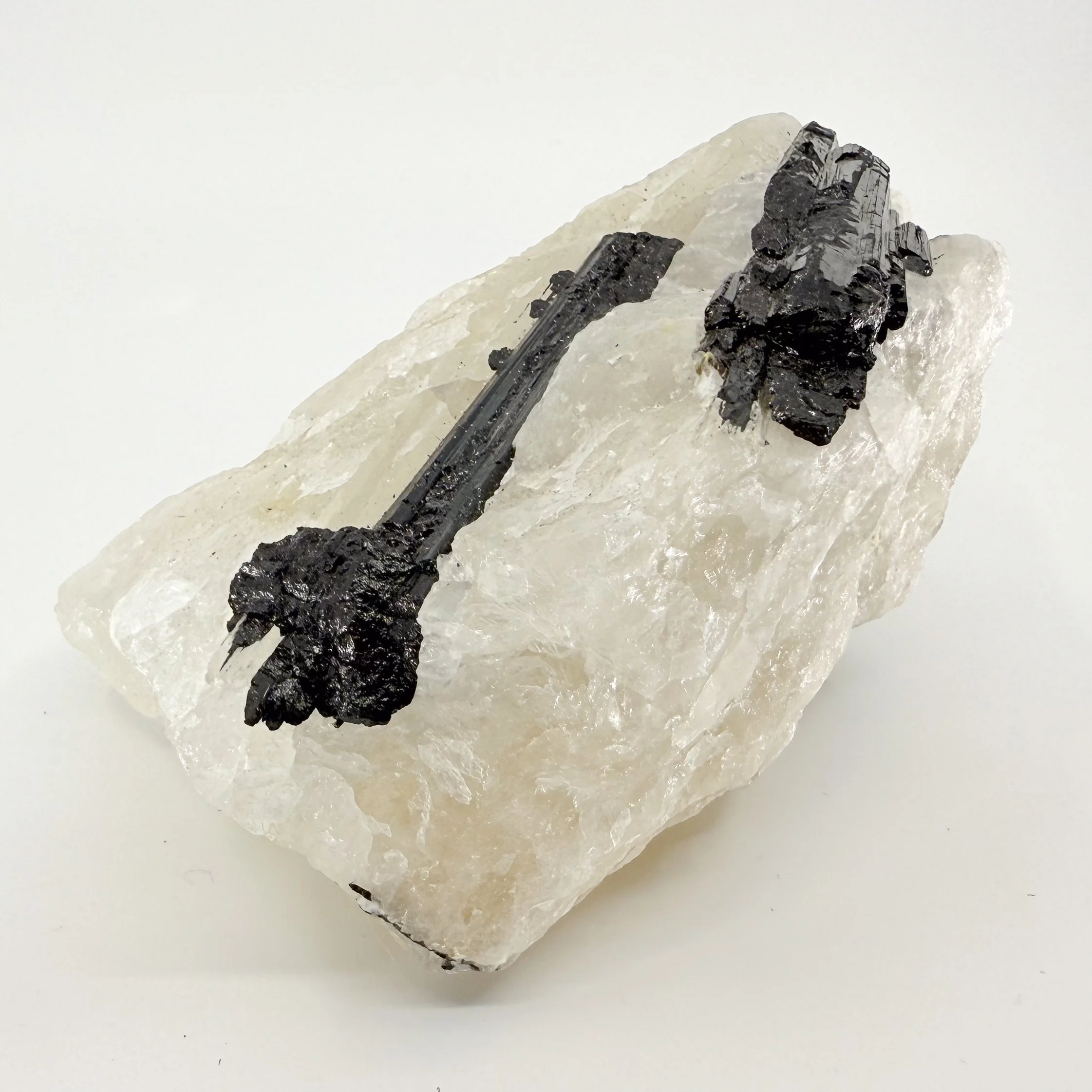 Image 3 of 5
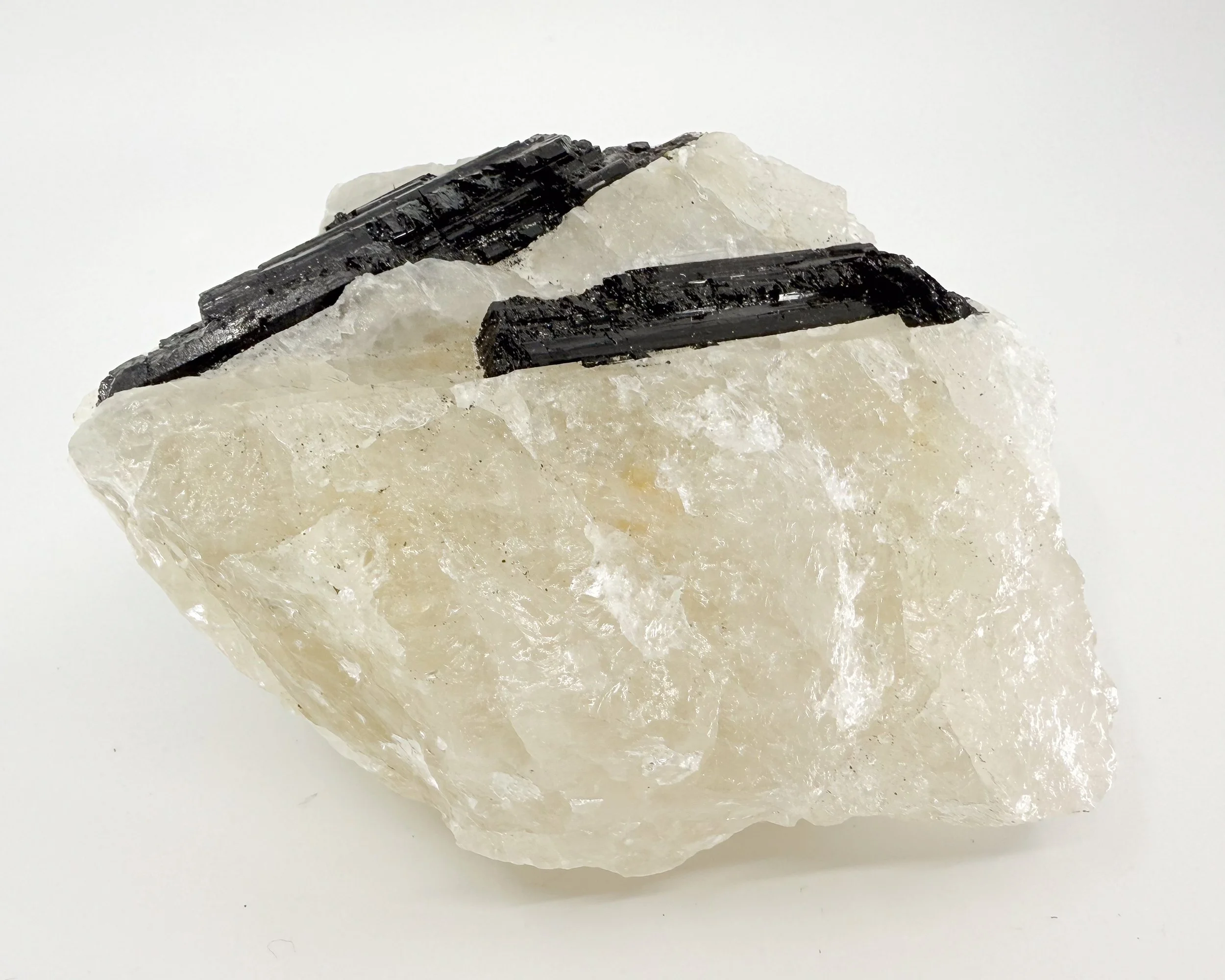 Image 4 of 5
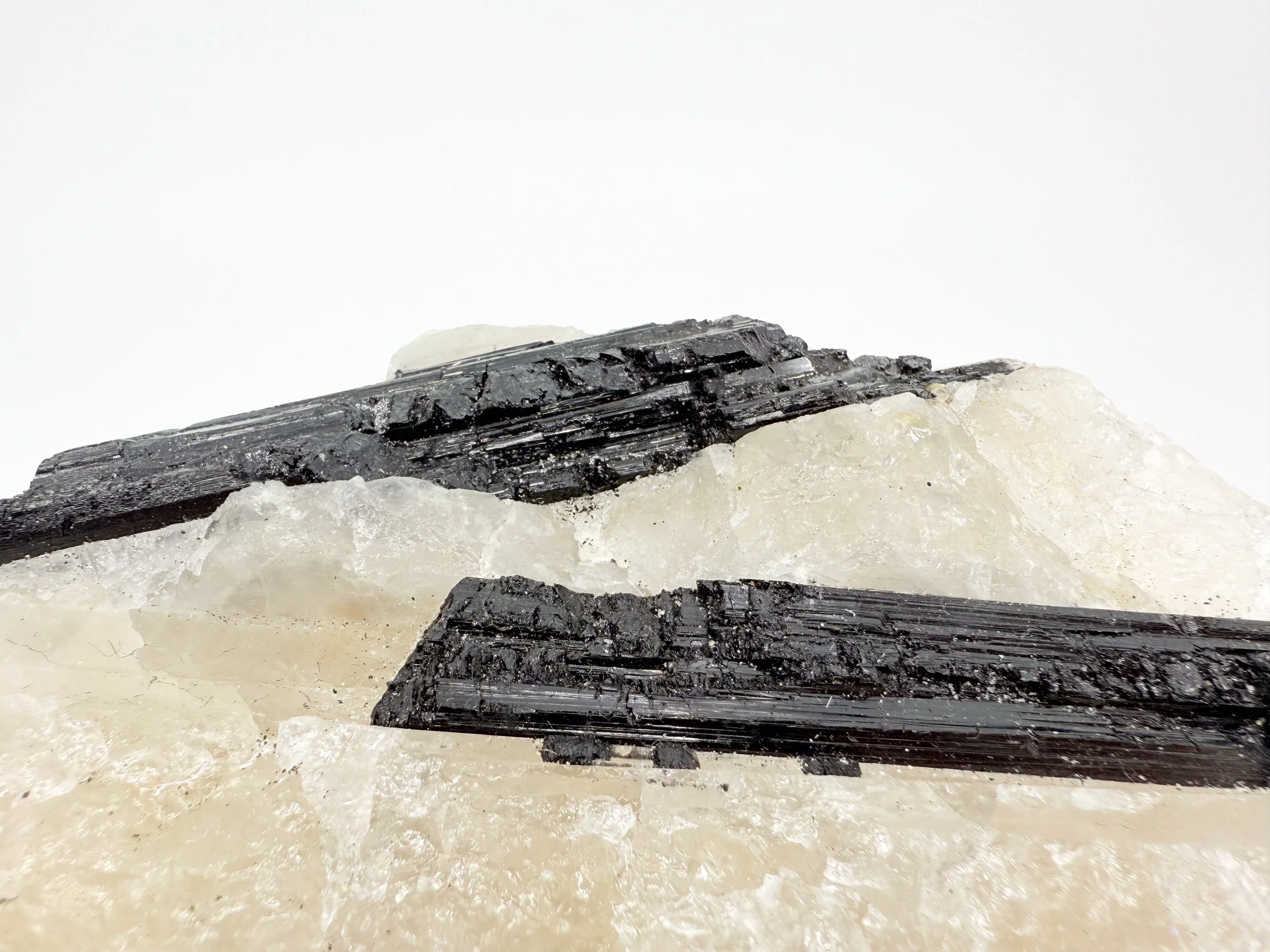 Image 5 of 5
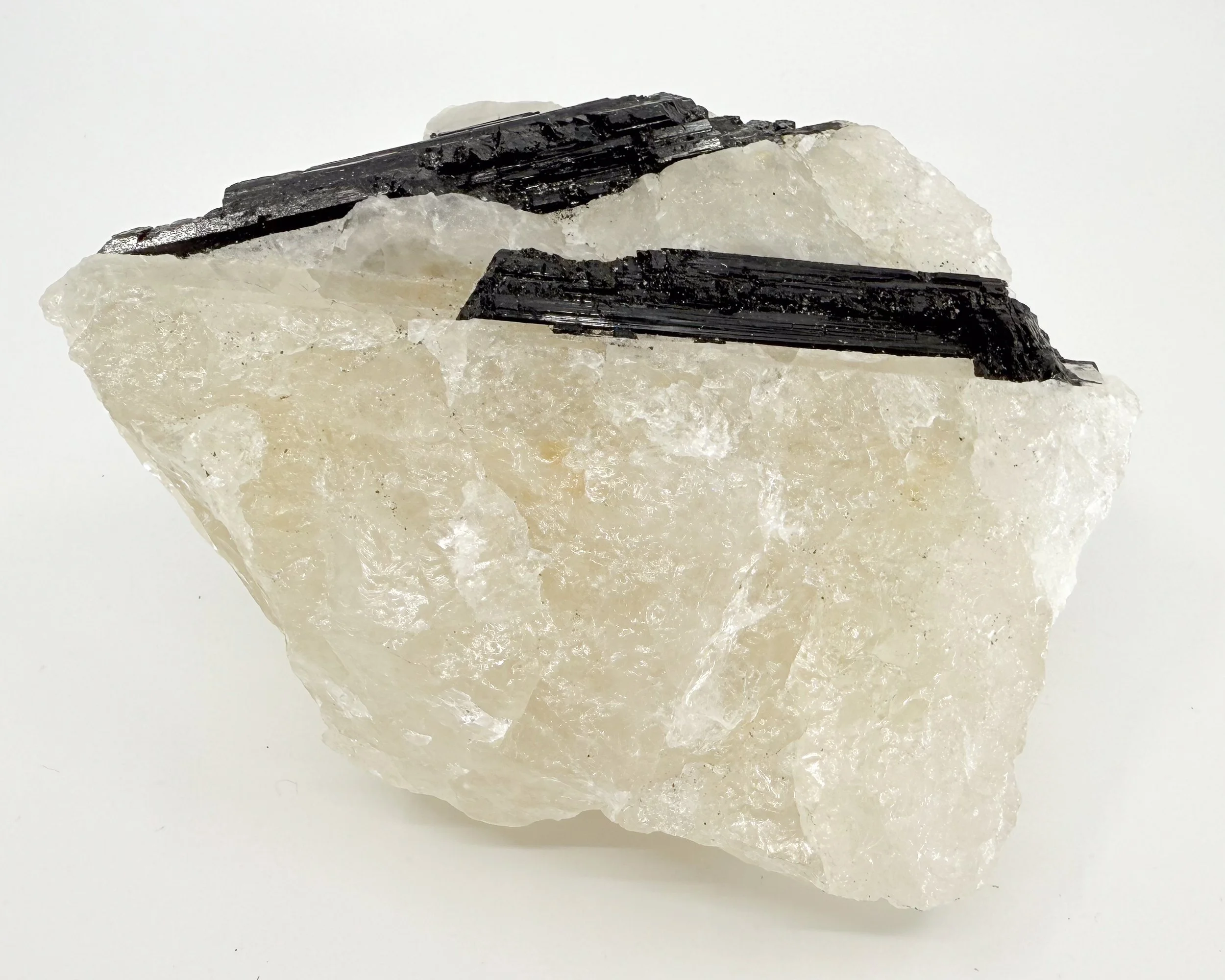
Quartz is a silicon dioxide mineral known for its clarity and geometric crystal structure, while black tourmaline is an iron-rich mineral that appears opaque black and typically forms in elongated, striated crystals.
These minerals commonly form together in hydrothermal and pegmatite environments, where tourmaline crystals grow within or alongside quartz, creating intergrown structures.
Quartz is a silicon dioxide mineral known for its clarity and geometric crystal structure, while black tourmaline is an iron-rich mineral that appears opaque black and typically forms in elongated, striated crystals.
These minerals commonly form together in hydrothermal and pegmatite environments, where tourmaline crystals grow within or alongside quartz, creating intergrown structures.